
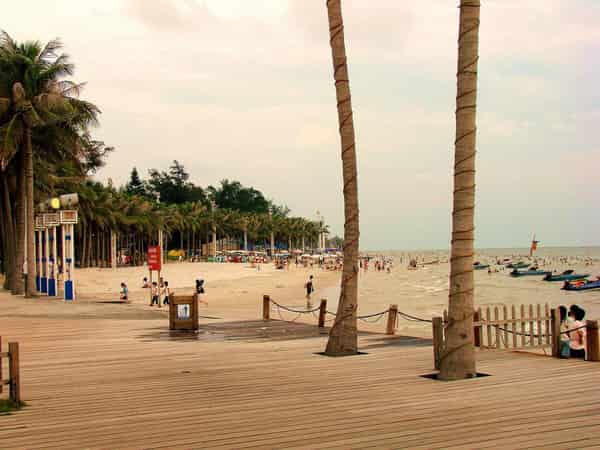
Objects, tombs, ports, estuaries, trade goods, pearl work, later arcades, fisheries, and island routes show a long coastal network rather than a newly invented resort.[1][2][3][4]
Evidence is distributed across Beibu Gulf coast, Hepu estuary and lowlands, Weizhou volcanic island, Mangrove bays and tidal flats, as well as museums, working neighborhoods, district and county routes, and local collections.[1][2][3][4]
Beihai is best understood as connected systems rather than a single attraction.[1][2][3][4]
The account distinguishes documented facts from interpretation, avoids political positioning and fixed community stereotypes, and leaves room for different residents' experiences.[1][2][3][4]
What does this reveal about Beihai?
Beihai is a Beibu Gulf port city of Hepu maritime archaeology, arcaded streets, pearl history, mangroves, fishing villages, seafood markets, Weizhou's volcanic island, estuaries, and a compact coastal urban core.[1][2][3][4]