
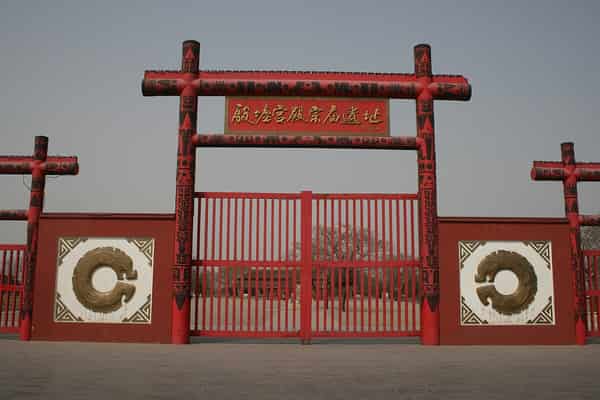
Yinxu reveals ancient writing and urban institutions, while Linzhou's canal records collective labor, water scarcity, mountain construction, and modern county change.[1][2][3][4]
Evidence is distributed across Huan River basin, Northern Henan plain, Taihang foothills and Linzhou valleys, Zhang River and county farmland, as well as museums, working neighborhoods, district and county routes, and local collections.[1][2][3][4]
Anyang is best understood as connected systems rather than a single attraction.[1][2][3][4]
The account distinguishes documented facts from interpretation, avoids political positioning and fixed community stereotypes, and leaves room for different residents' experiences.[1][2][3][4]
What does this reveal about Anyang?
Anyang connects Yinxu and oracle-bone research, the Huan River, Youli and older regional sites, a living industrial and agricultural city, and Linzhou's mountain engineering landscape.[1][2][3][4]