
Chengdu First-Time Guide: What to See and How to Plan
Plan a first visit to Chengdu with realistic timing, cultural context, priority landmarks, seasonal guidance, and routes that reflect the city's geography.
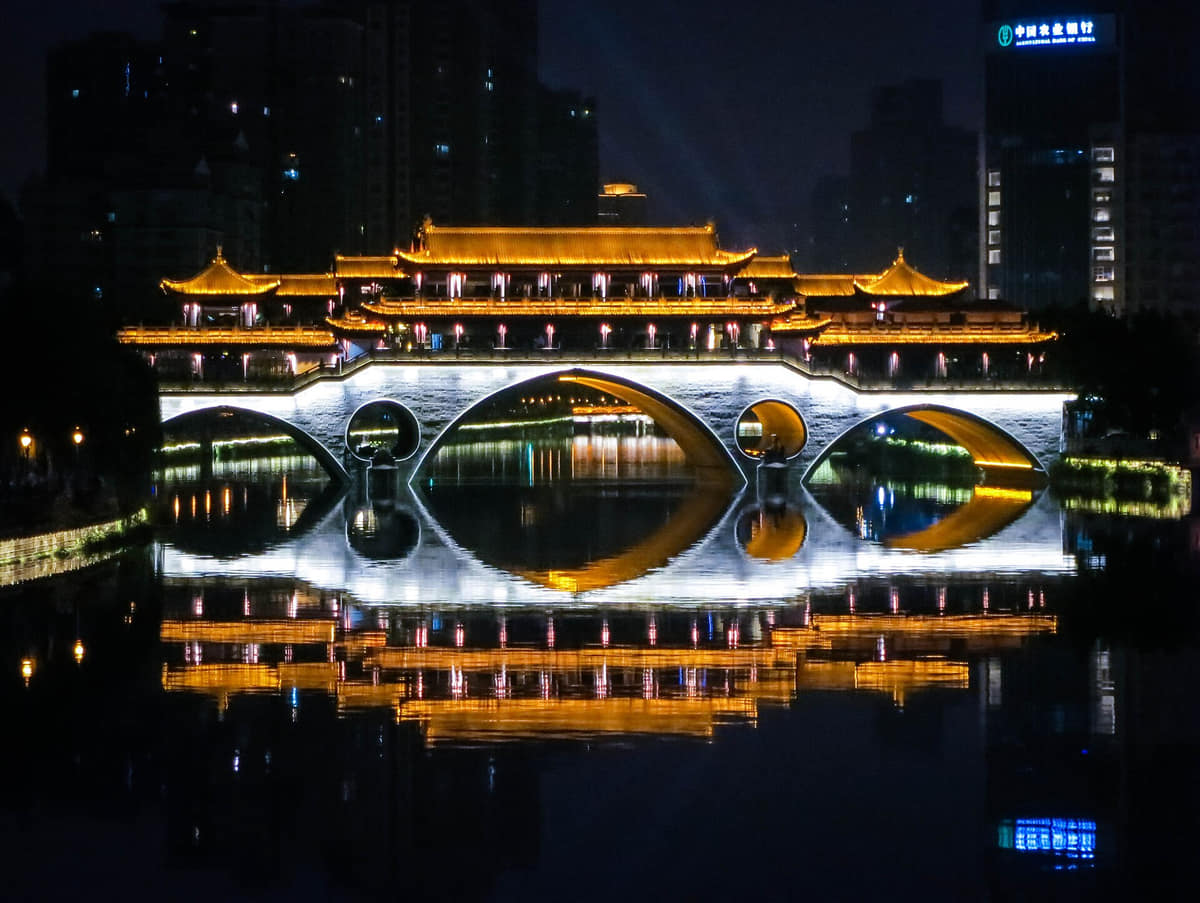
The short answer
Three full days work for the urban core, a panda or museum morning, and one western excursion. Add a fourth day if Dujiangyan or Mount Qingcheng is central to the trip rather than an optional extension.
What to prioritize
Chengdu is the capital of Sichuan and the center of a large municipality that stretches from the alluvial Chengdu Plain toward foothills and mountains in the west. Ancient Shu archaeology, irrigation, farming, commerce, migration, and political institutions shaped this geography over long periods. The modern metropolis is not adequately explained by a relaxed teahouse image. Dense neighborhoods, new districts, universities, technology and service industries, metro lines, greenways, museums, restaurants, county-level cities, and mountain communities all belong to the same municipal system. Public culture is unusually visible because many activities take place in shared settings: parks, teahouses, markets, food tables, temple courtyards, museum galleries, riverbanks, and neighborhood shops. These spaces are managed, commercialized, and changed as well as enjoyed. A complete visit therefore moves between evidence types. Archaeological collections explain the deep past; waterworks explain the plain; memorial sites show how later generations construct history; food and performance reveal skilled labor; outer districts restore ecological and county-level scale.
Wuhou Shrine
A memorial complex where timber architecture, courtyards, inscriptions, ritual, Three Kingdoms history, literature, and later popular memory overlap.[10]
Du Fu Thatched Cottage
A literary museum and garden that combines a reconstructed dwelling tradition, Ming–Qing buildings, poetry collections, research, education, and public leisure.[9]
Jinsha Site Museum
A protected archaeological site and museum that interprets Bronze Age settlement, ritual deposits, objects, conservation methods, and ancient Shu research.[7]
Chengdu Museum
A central civic institution with archaeology, urban history, folk-life, shadow-puppet, puppet, and temporary exhibitions inside a contemporary public building.[11]
Chengdu Panda Base
A conservation and research institution combining breeding, veterinary work, behavioral observation, public education, visitor management, and planted habitat.[8]
Dujiangyan irrigation system
A still-functioning water-management landscape where river topography, engineering, maintenance, farming, settlement, heritage, and tourism must be read together.[6]
Build a realistic first visit
- Visit the panda base early if it is a priority, but do not let the institution replace the wider ecological story west of the city.
- Give teahouses unhurried time; the social value is the long stay, not a quick photograph of a cup.
- Pair Jinsha archaeology with Dujiangyan to connect ancient settlement, water, and the geography of the Chengdu Plain.
- Use museums or shaded parks during hot and rainy periods, then move food and street exploration later in the day.
Seasonal orientation
Spring
Temperatures turn mild, humidity rises, and parks become especially active. Cloudy or showery days remain common, so layers and light rain protection are useful.[1][13]
Summer
Hot, humid weather and the main rainy season shape the day. Indoor museums, shaded parks, and later evening activity often make more comfortable rhythms.[4]
Autumn
Early autumn can stay warm, while later weeks are usually milder and less humid. This is often the clearest season for combining urban walks with western day trips.[4]
Winter
Winters are generally milder than northern China but can feel cool and damp under persistent cloud. Snow is uncommon in the urban core but possible in higher western mountains.[4]