A Central Plains capital where Shang-period urban archaeology, the Yellow River, Songshan institutions, railways, logistics, county industries, and rapid metropolitan growth occupy one municipality.
Railway junction, Shang city archaeology, Henan Museum, Yellow River, Songshan and Dengfeng, logistics, wheat foodways, and metropolitan expansion[1][2][3][4]
Guide scope
Twelve county-level units spanning the central core, Yellow River plain, airport corridor, industrial county-level cities, and Songshan mountain edge[1][2][3][4]
Understand Zhengzhou through several urban times, not a single image
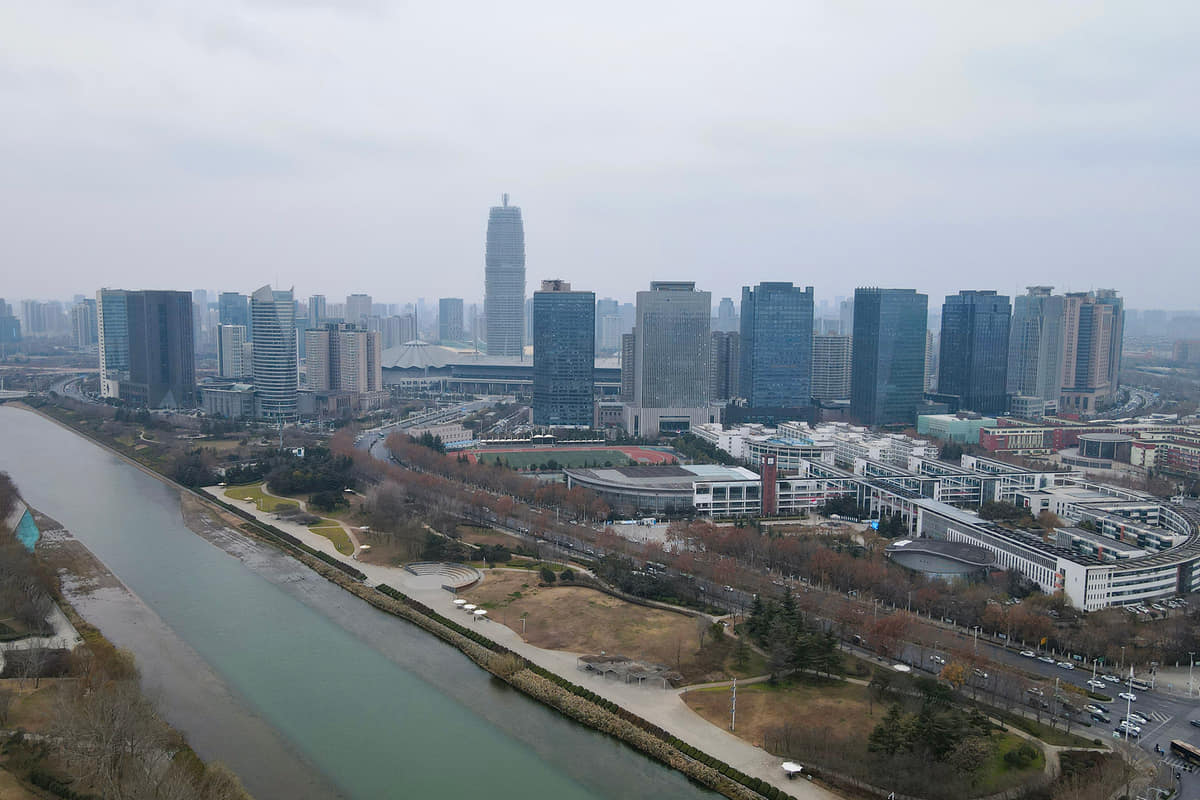
Zhengzhou is best read as a municipality between the Yellow River and Mount Song, not as a single downtown skyline. Six districts, five county-level cities and one county connect the dense core with river bottomlands, industrial towns, archaeological sites, airport and logistics corridors, farmland and mountain settlements.
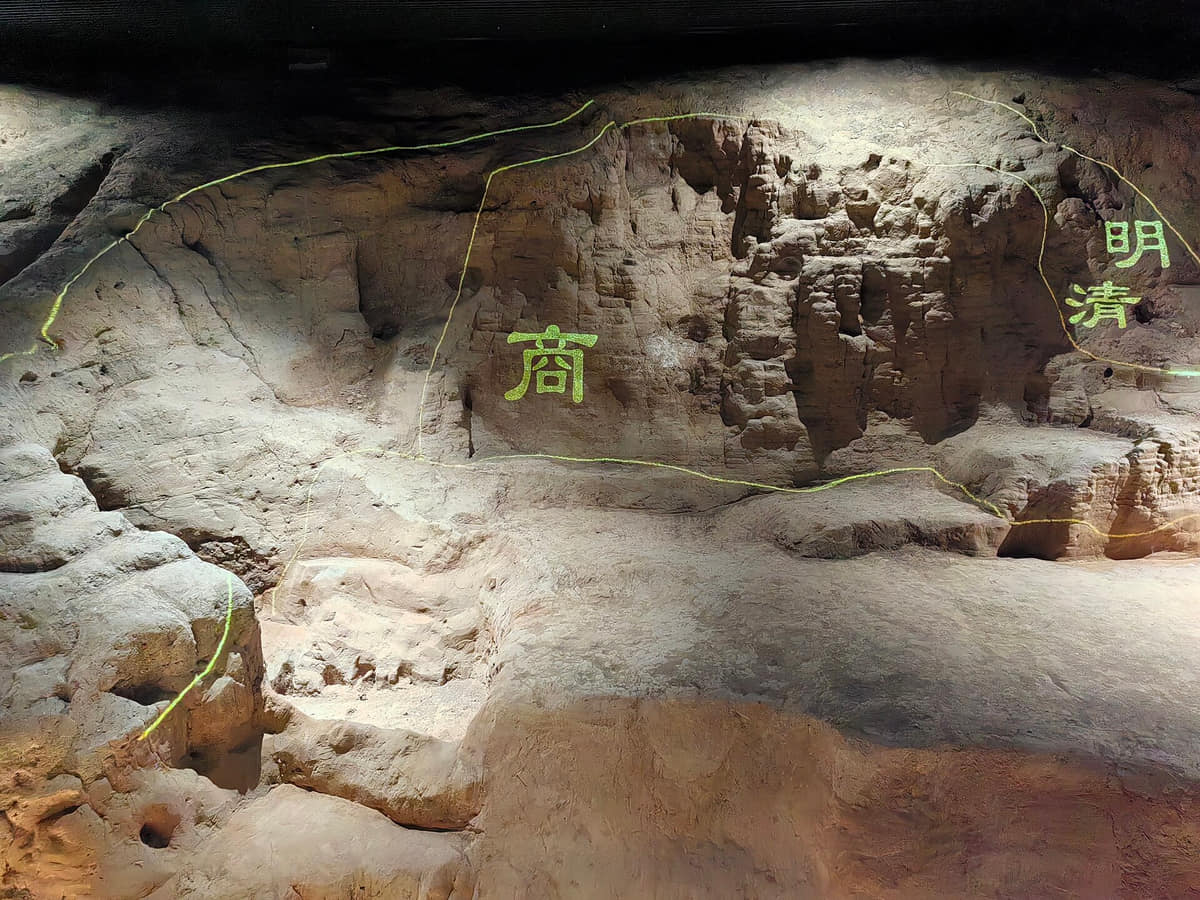
Its most distinctive urban fact is the coexistence of radically different timescales. Rammed-earth walls and Shang-period craft zones remain inside a city reshaped by railways, provincial institutions, wholesale trade, high-speed rail, manufacturing, universities and outward metropolitan growth.
Dengfeng adds a serial World Heritage landscape of ritual, religion, education and astronomy around Mount Song; Gongyi adds grottoes, Northern Song tombs and river-valley industry; Xinmi, Xingyang, Xinzheng and Zhongmu add living heritage, county foods and distinct everyday economies.
This guide treats archaeology, museum display, living religion, martial arts, tourism, railway memory, contemporary logistics and food branding as related but separate evidence layers. Legendary, promotional or inherited claims are labelled as traditions rather than converted into archaeological fact.
Railway junction
Stations, logistics, markets, labor, migration, and urban form explain modern Zhengzhou.
Archaeological city
Early walls and collections challenge the idea that the city is only modern.
Yellow River plain
Water, sediment, flood management, farming, and ecology define the northern municipality.
Songshan edge
Dengfeng adds mountains, institutions, villages, heritage, and tourism to the municipal picture.
A visual record of the city
Twenty-seven locally hosted, rights-cleared images connect metropolitan scale, provincial and municipal museums, Shang and Neolithic archaeology, Yellow River bottomland and three railway-crossing layers, high-speed rail, Mount Song, six Dengfeng heritage settings, Gongyi grottoes and tombs, plus five food contexts. Captions separate visible evidence from provenance, reconstruction, hydrology, religious practice, current access, recipe claims and endorsement.
Food court in an industrial reuse complexPhoto: Windmemories · source · CC BY-SA 4.0
Location, boundary, and 3D buildings
The dense core stands south of the Yellow River on a broad plain; the municipality extends east through transport and agricultural corridors and west into the Songshan uplands.[1][2][3][4]
Yellow River terraces, Central Plains transport corridors, Songshan uplands, and a twelve-unit municipality define Zhengzhou.
Yellow River terrace
The municipality reaches the Yellow River north of the core, where sediment, levees, flood history, wetlands, and agriculture shape settlement.[1][2][3][4]
Central Plains
Broad plains support dense rail, road, logistics, farming, industry, and metropolitan expansion in several directions.[1][2][3][4]
Songshan edge
Western county-level cities rise toward Songshan, adding mountains, valleys, heritage sites, reservoirs, towns, and villages.[1][2][3][4]
Municipal scale
Six districts, one county, and five county-level cities span the dense core, airport corridor, Yellow River plain, industrial towns, and Songshan.[1][2][3][4]
Permanent residents across Zhengzhou's six districts, five county-level cities and one county; includes 10.7104 million urban and 2.4276 million rural permanent residents and must not be mixed with central built-up-area population, registered residents, passengers, visitors or metropolitan estimates
Population figures use the administrative area and source date shown below.[5][6]
Climate
Warm-temperate continental monsoon climate
Summers are hot and rainy, winters cold and dry, spring can be windy, and autumn is often clearer; river and mountain conditions vary across the municipality.
Climate describes long-term seasonal patterns; live conditions appear separately.[1][2][3][4]
Seasonal patterns
March–May
Spring
Fast warming, dry wind, pollen, and occasional dust favor layers, hydration, and flexible river or mountain plans.[1][2][3][4]
June–August
Summer
Heat, humidity, thunderstorms, and concentrated rain require shade, indoor breaks, and caution near channels and mountains.[1][2][3][4]
September–November
Autumn
Clearer, drier periods are well suited to archaeology, Yellow River landscapes, Dengfeng, and cross-municipality travel.[1][2][3][4]
December–February
Winter
Cold, dry weather and possible air-quality episodes make museums, shorter walks, and current forecasts useful.[1][2][3][4]
A short history of the city
Eleven sourced layers move from Dahecun and Central Plains settlement through the Shang walled city, county and Mount Song institutions, brick and rock-cut heritage, Song tombs, the 1904–1906 railway junction, neutral documentation of the 1923 labour conflict, the 1954 provincial-capital shift and contemporary high-speed-rail metropolis.
Zhengzhou East station from the airPhoto: Windmemories · source · CC BY-SA 4.0
Dahecun and long settlement sequences
The Dahecun site preserves deposits associated with Yangshao, Longshan and later cultures. Houses, ditches, production areas and pottery let archaeologists study changing settlement rather than imagine one timeless ‘ancient village’.[14][9]
Networks across the Central Plains
Sites across today's municipality document farming settlements, craft specialisation, exchange and increasingly complex centres. These layers are distributed across counties, not confined to the modern core.[9][13]
A walled capital-scale city
The Zhengzhou Shang City Site includes large rammed-earth walls, palace-related areas, workshops, residential remains, burials and hoards. Different features and dates must be reconstructed from excavation, not a single wall segment.[10][11]
County networks and Mount Song institutions
Roads, river crossings, agriculture and county towns connected the plain with the western mountains. Around Mount Song, ritual, religious and educational institutions accumulated over many dynasties.[15][9]
Brick pagodas and rock-cut worship
Songyue Pagoda and the Gongxian Grottoes represent different architectural and devotional settings. Their visible fabric includes original work, damage, repair and conservation that must be distinguished.[15][16]
Education, ritual and astronomical measurement
Songyang Academy, Zhongyue Temple and Gaocheng Observatory show that the Dengfeng landscape was organised through institutions of learning, mountain ritual and measurement—not only through scenic peaks.[15]
An imperial funerary landscape in Gongyi
Imperial and associated tombs, spirit paths and stone figures are dispersed through an agricultural landscape. The living fields are part of the present setting, not proof that every field preserves undisturbed archaeology.[17][13]
Railway junction formation
The station and the intersection of major railway corridors accelerated the growth of workshops, markets, worker districts and movement. Modern Zhengzhou's junction identity developed through infrastructure and labour together.[20][21]
Railway labour conflict and public memory
The Erqi sites commemorate the Beijing–Hankou railway workers' strike and its violent suppression. The guide records the labour event, memorial buildings and later urban symbolism without turning the city page into political advocacy.[19][20]
Provincial capital institutions
Henan's provincial capital moved to Zhengzhou, expanding administration, museums, education, health services, industry and urban construction. Provincial institutions serve wider Henan and should not be mistaken for purely local collections or traditions.[6][9]
High-speed rail, logistics and metropolitan expansion
Zhengzhou East station, metro lines, roads, aviation, logistics, manufacturing and new districts enlarged the city's regional role. The municipality still contains county towns, villages, farms and mountains beyond the planned core.[5][6][7]
People, language, and everyday rhythms
Eight perspectives describe 13.138 million end-2025 permanent residents through a precise municipality-wide statistical scope, twelve local contexts, junction mobility, core–county differences, education, work, language and an explicit rejection of one city personality.
Population scope
The official end-2025 permanent-resident count is 13.138 million: 10.7104 million urban and 2.4276 million rural permanent residents. These are municipality-wide statistical categories, not the central built-up-area population.[5][6][7][20]
Twelve local contexts
Six districts, five county-level cities and one county include dense neighbourhoods, new districts, river villages, industrial towns, airport corridors, county seats, farming communities and mountain settlements.[5][6][7][20]
A mobile junction population
Rail, roads, aviation, wholesale trade, logistics, universities, construction and services bring students, workers, traders and families from across Henan and beyond; permanent-resident statistics are not passenger counts.[5][6][7][20]
Core and counties
Daily rhythms differ between Erqi and Zhengdong commuters, Huiji river-edge communities, Dengfeng heritage workers, Gongyi industrial and farming settlements, and the county economies of Zhongmu and western Zhengzhou.[5][6][7][20]
Education and research
Universities, archaeology institutes, museums, hospitals and technical organisations support large professional and student communities, while their provincial remit extends beyond Zhengzhou residents.[5][6][7][20]
Work and production
Railway, logistics, manufacturing, food processing, construction, retail, tourism, farming and public services shape the municipality; no single ‘service city’ or ‘factory city’ label is adequate.[5][6][7][20]
Language
Standard Mandarin is widely used. Local speech belongs broadly to Central Plains Mandarin, with differences across the central districts and county-level areas; accent does not define origin, education or identity.[5][6][7][20]
Avoiding one personality
More than thirteen million permanent residents cannot be reduced to ‘practical railway people’, noodles, one accent or one promotional city character. The useful unit of comparison is a documented community and context.[5][6][7][20]
Culture and daily life
Image credits and licenses
Bronze lei from the Shang cityPhoto: Windmemories · source · CC BY-SA 4.0
Shang walls, buried remains, museums and archaeological parks occupy the same streets as housing, traffic and commerce. Conservation, excavation, reconstruction and public display are different actions and should be labelled separately.[10][11]
Dahecun public archaeology
House foundations, pottery and settlement plans help visitors read prehistoric daily life through evidence. Immersive displays are interpretation tools, not direct windows onto an unchanged past.[14][12]
Shaolin kung fu
The official heritage record describes a cultural system formed in the specific Buddhist environment of Shaolin Temple. Monastic practice, transmitted martial knowledge, sport schools, stage performance, cinema and tourism overlap but are not interchangeable.[22][26]
Dengfeng serial landscape
UNESCO inscribes eight clusters associated with ritual, religion, education and astronomy around Mount Song. ‘Centre of Heaven and Earth’ is a historical cosmological concept represented by the property, not a modern scientific geography claim.[15]
Yu Opera in the provincial capital
Yu Opera is a Henan-wide tradition with many repertoires, performance lineages and local styles. Zhengzhou hosts institutions and stages, but the provincial tradition should not be claimed as originating entirely in the city.[23]
Chaohua wind music
The Xinmi tradition preserves distinctive instruments, notation and performance contexts. Heritage recognition documents a living practice and its safeguarding; it does not mean every account of antiquity is archaeologically proven.[24][26]
Chang family boxing
The Xingyang martial tradition has textual lineages and transmission beyond the locality. It broadens Zhengzhou martial culture beyond Shaolin while remaining a distinct practice with its own teachers and methods.[25][26]
Yellow River craft and memory
Levees, crossings, flood accounts, farming, river work and crafts such as sediment-clay inkstones frame the river differently. Material claims about sediment or technique require maker and conservation evidence.[22][7]
Museums and provenance
Henan Museum, Zhengzhou's municipal museums and county museums connect local finds with province-wide collections. Every object should preserve findspot, collection, date, restoration and display distinctions.[18][12][13]
Railway public memory
Stations, the first Yellow River railway bridge, worker neighbourhoods, Erqi memorial sites, markets and later metro lines form several kinds of public memory: engineering, labour, mobility and redevelopment.[19][21][20]
County crafts and kilns
Dengfeng ceramics, Xinmi paper and metal work, Gongyi ceramic history and other county practices belong to specific workshops and safeguarding records. ‘Zhengzhou craft’ is useful only when the locality remains visible.[26][13]
Contemporary cultural city
Provincial arts institutions, universities, bookstores, live performance, industrial reuse, museums, parks, digital media and county festivals create a present culture that is not a decorative extension of ancient history.[6][12]
Food and local flavor
Fourteen entries distinguish Zhengzhou huimian and shop variation, hulatang, two old-city techniques, river-associated fish, Gongyi meat foods, Dengfeng bread, mutton and vegetarian tables, Xinzheng and Zhongmu county dishes, and safe menu reading. Locality, technique, inherited story, ingredients, dietary needs and present food safety remain separate.
Food court in an industrial reuse complexPhoto: Windmemories · source · CC BY-SA 4.0
Stretched wheat noodles
Zhengzhou huimian
Broad noodles, broth and accompaniments support lamb, beef, three-delicacy, curry and other shop styles. Heritage or brand claims do not create one canonical recipe; ask about meat, stock, wheat, sesame, allergens and portion.[28][27]
A documented shop variation
Curry-soup huimian
The yellow curry broth visible in one Zhengzhou serving demonstrates adaptation within the huimian category. It should be described as one restaurant style, not the original or dominant city recipe.[28][27]
Peppery breakfast soup
Hulatang
Thickened soup with pepper, wheat products, legumes, vegetables and sometimes meat appears in many Henan forms. Zhengzhou shops gather regional styles; confirm ingredients, spice, allergens and halal requirements directly.[29][27]
Pleated wheat wrappers
Caiji steamed dumplings
The official profile documents mixed hot- and cold-water dough, detailed pleating and multiple fillings. Current recipes and products can change, so historical technique should not be treated as today's complete menu.[31][27]
Pancake strips and slow-cooked meat
Geji braised pancake
A documented technique combines baked pancake strips, vegetables and seasoned meat in a covered pan. The inherited origin story is a tradition narrative; the verifiable city history includes its twentieth-century Zhengzhou operation.[30][27]
River-associated banquet dish
Yellow River carp
Braising, frying and baked-noodle presentations connect restaurants to a broader Yellow River identity. Species, sourcing, freshness, wild-versus-farmed status and sustainability cannot be inferred from the menu name.[27][32]
Gongyi meat-filled flatbread
Huiguozhen rouhe
The official profile describes crisp hard-dough bread filled with seasoned cooked pork offal and meat. Cut, fat, garlic, wheat and current hygiene should be confirmed; the dish belongs specifically to Huiguo Town in Gongyi.[27][32]
Gongyi preserved shop tradition
Xiyixing braised meats
The official food directory records a Gongyi business tradition of braised pork, sausage, trotters, tripe and beef. Brand history is not a guarantee of current ownership, recipe, nutrition or food safety.[27][32]
Sesame-topped baked bread
Dengfeng jiaogai shaobing
The Dengfeng bread uses wheat, sesame, oil, salt and seasoning, with a raised crisp ‘lid’. It is a locality-specific snack within Zhengzhou Municipality, not a universal downtown breakfast.[27][32]
Mountain-county meat and broth
Dengfeng braised mutton
Municipal food routes list Dengfeng braised mutton as a county-level speciality. Recipes vary by shop; confirm cut, stock, wheat accompaniments, coriander, spice, halal practice and portion.[32]
Temple-associated vegetarian cuisine
Yongtai vegetarian table
The official directory places a vegetarian banquet tradition in Dengfeng. ‘Vegetarian’ can still include alliums, eggs, dairy, alcohol, mock meats or shared cooking equipment, so dietary requirements need direct clarification.[27]
County banquet and household food
Xinzheng rice-steamed pork
The municipal route identifies a Xinzheng rice-flour pork tradition. It should be presented as one named local preparation, not as proof that one recipe represents all Xinzheng households.[32]
County-level meat preparation
Zhongmu five-spice rabbit
The municipal food route associates five-spice rabbit with Zhongmu. Confirm farmed source, cut, bones, spice, allergens, storage, current venue and food safety; the name alone establishes none of these.[32]
Locality, technique and safety
How to read a Zhengzhou menu
Separate city brand, county origin and the actual plate. Ask for ingredients, meat species and cut, stock, wheat or sesame, peanuts, dairy, eggs, alcohol, spice, halal or vegetarian handling, portion, price and current hygiene; heritage status never guarantees safety.[27][32]
Northern Song imperial tombsPhoto: Gary Todd · source · CC0
Henan Museum
A provincial museum in Zhengzhou with collections spanning a much wider geography than the city. Start with object labels and provenance, then connect artefacts to local or provincial histories without merging them.[18]
Zhengzhou Shang City Site and archaeological park
Rammed-earth walls and distributed remains survive inside the modern core. The park, museum and marked nodes interpret a much larger archaeological city than any single visible mound.[10][11][12]
Dahecun Archaeological Site Park
A long prehistoric settlement sequence presented through protected remains, objects, landscape and contemporary interpretation. Current visitor arrangements should be checked against official museum information.[14][12]
Erqi Memorial Tower and hall
Two memorial sites that connect railway labour history with the commercial and transport geography of central Zhengzhou. Building date, event history and today's square are distinct layers.[19][20]
Yellow River bottomland and Huayuankou
A broad, managed river corridor of active channel, bars, bottomland, levees, farms, ecology and public landscapes. River stage, flood risk and access must be checked live.[7][8]
First Yellow River railway bridge remains
Industrial heritage that explains why crossing the river mattered to Zhengzhou's railway growth. Historic fabric, later bridges and present rail operation should be documented separately.[21][20]
Zhengzhou East railway station
A high-speed-rail interchange whose tracks, concourses, roads and surrounding development display contemporary metropolitan mobility. Timetables, security, accessibility and crowding are live conditions.[6][20]
Zhengdong New Area CBD and Ruyi Lake
A planned circular business and cultural district that contrasts with Erqi's railway-centred core. Architecture, water, public space and transport reveal a different phase of urban expansion.[6][7]
Mount Song
A mountain system and cultural landscape, not a single scenic summit. Geology, Taishi and Shaoshi massifs, villages, institutions, trails and management require different forms of evidence.[7][15]
Shaolin Temple
A living Chan Buddhist institution, major architectural complex, component of the UNESCO serial property and context for a martial tradition. Worship, heritage, training, performance and tourism must remain distinct.[15][22]
Shaolin Pagoda Forest
A funerary and commemorative landscape of stupas of different dates and forms. Individual biographies, inscriptions and repairs require site-level records and respectful behaviour.[15]
Pagoda of Songyue Temple
A distinctive early brick pagoda within the Dengfeng World Heritage property. Its shape is immediately visible; date, material phases, repairs and condition require conservation evidence.[15]
Zhongyue Temple
An axial ritual and religious complex connected with Mount Song. Different halls, gates, trees, steles, worship and tourism belong to different dates and practices.[15]
Gaocheng Observatory
A scientific-heritage structure associated with shadow measurement and astronomical work. The instrument's operation and historic knowledge system need explanation beyond its architectural form.[15]
Songyang Academy
An educational landscape of courtyards, halls, steles and old trees. Institutional history, current fabric and later reconstruction should be separated rather than compressed into one founding date.[15]
Gongxian Grottoes
A Gongyi rock-cut Buddhist complex whose sculpture, iconography, damage and conservation extend Zhengzhou's heritage westward. Current access and photography rules require site information.[16][13]
Northern Song imperial tombs
A dispersed funerary landscape in Gongyi where stone figures, spirit paths, mounds, villages and cultivated fields coexist. Treat active agriculture and protected archaeology as overlapping, not identical.[17][13]
Ways to explore the city
Compare archaeological, railway, river, planned-district, and Songshan landscapes to understand the whole municipality.
Three urban times
Shang city wall → Erqi district → Zhengdong
Compare early rammed-earth urbanism, railway-era growth, and the planned metropolitan center.[1][2][3][4]
Plain to river
Henan Museum → Yellow River corridor
Move from province-wide collections to the sediment, levees, wetlands, farms, bridges, and ecology of the river.[1][2][3][4]
Songshan municipality
Zhengzhou core → Dengfeng heritage
Use a full day to understand why mountain institutions, villages, tourism, and county-level life belong to the same city guide.[1][2][3][4]