
Land and water
This city-specific topic connects place, daily life, and the wider municipal landscape: Land and water.
Sichuan Province · Sichuan Province, Southwest China
A central Sichuan river city where Guanyin pilgrimage, Song porcelain, Fu River wetlands, old-town streets, energy landscapes, and county agriculture offer several distinct ways to read place.
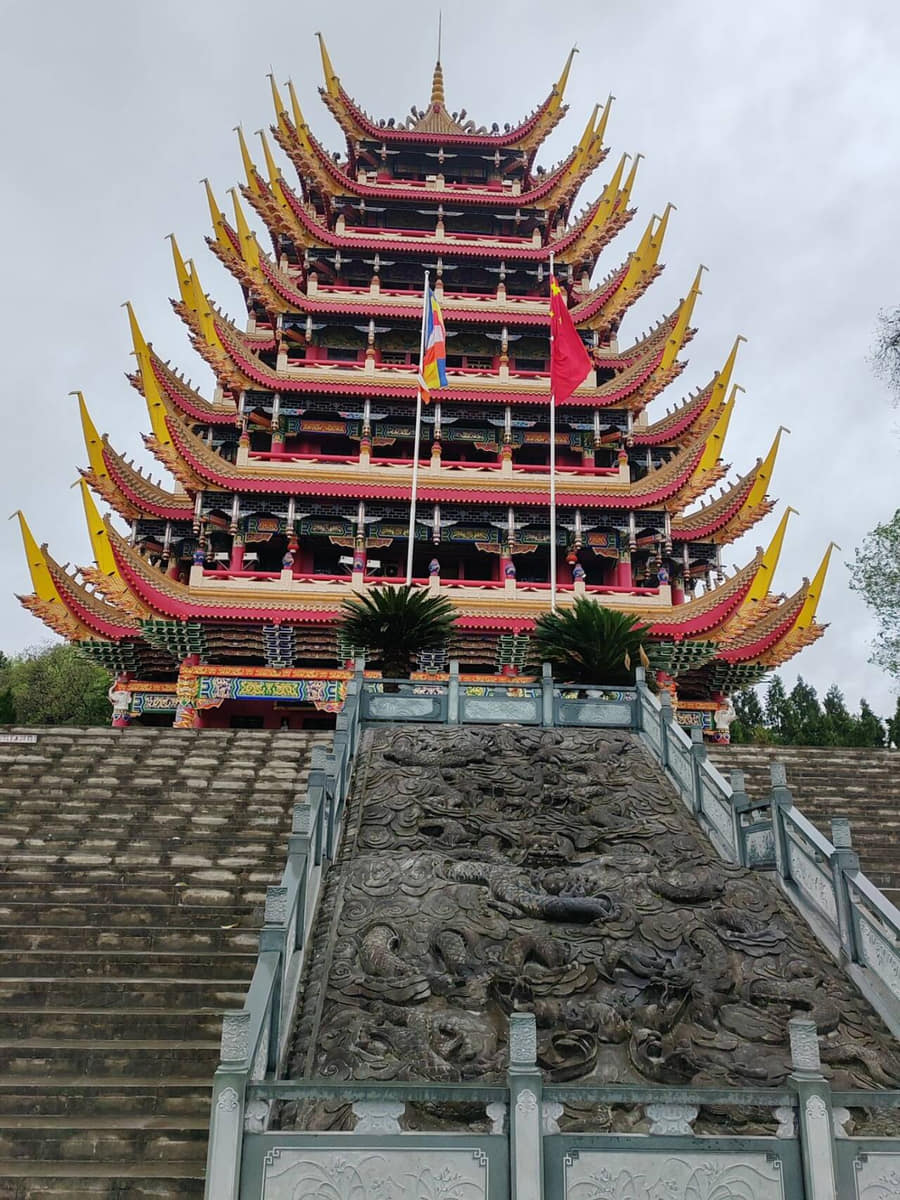
Suining occupies the Fu River's middle reach in the low hills of the central Sichuan Basin. Chuanshan and Anju districts, Shehong city, and Pengxi and Daying counties form five related but distinct daily geographies, connected by roads, rail, migration, markets, water, public services, and agricultural supply chains.
The city's strongest cultural subjects do not form one seamless origin story. Buddhist pilgrimage at Guangde and Lingquan, the Suining name and administrative record, Chen Zi'ang and later literary memory, Song-period buried ceramics, Pengxi wall painting and architecture, and Daying's brine-well technology each require their own evidence.
The Fu River and Guanyin Lake are also working urban waters: flood control, tributaries, wetlands, water quality, bridges, embankments, parks, boats, fishing rules, maintenance, housing, commerce, and public exercise overlap with scenic interpretation.
A complete exploration therefore connects museums to excavation records, temples to active communities and conservation, famous writers to schools and readers, salt heritage to labor and geology, food names to ingredients and kitchens, and city images to county households—while clearly marking uncertainty and later reconstruction.
This city-specific topic connects place, daily life, and the wider municipal landscape: Land and water.
This city-specific topic connects place, daily life, and the wider municipal landscape: Historical layers.
This city-specific topic connects place, daily life, and the wider municipal landscape: Living culture.
This city-specific topic connects place, daily life, and the wider municipal landscape: County diversity.
Eighteen rights-cleared local images connect Guangde and Lingquan, Chen Zi'ang memory, Zhuotong salt technology, Pengxi halls and everyday markets, Fu River urban water, Shehong village and town landscapes, Anju public space, and modern heritage governance.
This city-specific topic connects place, daily life, and the wider municipal landscape: Fu River corridor.[1][2][3][4]
Four geographic relationships define Suining.
This city-specific topic connects place, daily life, and the wider municipal landscape: Fu River corridor.[1][2][3][4]
This city-specific topic connects place, daily life, and the wider municipal landscape: Central basin low hills.[1][2][3][4]
This city-specific topic connects place, daily life, and the wider municipal landscape: Wetlands and reservoirs.[1][2][3][4]
This city-specific topic connects place, daily life, and the wider municipal landscape: Five county-level units.[1][2][3][4]
Loading current conditions…
Forecast data: Open-MeteoPermanent residents across Suining Municipality
Population figures use the administrative area and source date shown below.[1][2][3][4]Warm humid summers, mild cloudy winters, and basin rainfall shape the Fu River and agricultural low hills.
Climate describes long-term seasonal patterns; live conditions appear separately.[1][2][3][4]Temperatures rise quickly; rain, cloud, and local elevation call for flexible outdoor plans in Suining.[1][2][3][4]
Warm humid summers, mild cloudy winters, and basin rainfall shape the Fu River and agricultural low hills.[1][2][3][4]
Clearer intervals and cooler evenings usually favor river, old-town, museum, and county routes.[1][2][3][4]
Damp cool conditions make layered clothing and indoor–outdoor route pairing practical.[1][2][3][4]
Nine evidence-led layers move from river-terrace settlement through the Suining name, Tang literary and temple institutions, Song ceramics and brine wells, Ming–Qing arts, modern transport, municipal formation, and contemporary river and heritage work.
Regional archaeological records place human activity along river terraces and basin routes long before the modern city. Sites, artifacts, stratigraphy, dating, excavation history, museum custody, and today's administrative boundaries must remain distinct evidence layers.[7][5]
The Fu River corridor supported settlements, farming, transport, taxation, ritual, and changing county jurisdictions. Official chronicles associate the name Suining with an Eastern Jin administrative change; etymology, exact jurisdiction, and later reuse should be dated rather than flattened.[7][22]
Religious institutions developed through patronage, land, buildings, monks, pilgrims, routes, markets, and repeated rebuilding. Shehong-born Chen Zi'ang belongs to Tang literary history, while the present reading-platform complex is a later commemorative landscape requiring source and fabric distinctions.[11][16]
The Suining museum's Song ceramics point to long-distance kiln networks, ownership, use, burial circumstances, discovery, excavation, conservation, classification, and display. A museum label should not turn every vessel into a locally made product or a complete picture of Song society.[14][15]
Zhuotong wells are read through geology, drilling and lining tools, bamboo components, lifting, brine storage, fuel, boiling, salt markets, taxes, maintenance, accidents, water and soil impacts, and transmitted technical knowledge—not through the picturesque frame alone.[5][23]
Pengxi's architecture and wall paintings, central-city institutions, market towns, river transport, sugar knowledge, local education, pilgrimage, farming, and writers such as the Zhang family formed overlapping local histories. Surviving works and later attributions need documentation.[13][11]
Boats, ferries, warehouses, streets, temples, markets, schools, charitable and religious institutions, new roads, photography, industry, and public administration overlapped. Archival images record selective viewpoints and must be compared with maps, texts, buildings, and resident memory.[22][7]
Rail and highway connections changed markets, work, schooling, migration, food supply, and the relationship between county towns and the central city. Suining's present prefecture-level framework emerged in 1985 after earlier administrative reorganizations.[7][6]
High-speed travel, logistics, lithium and energy industries, agriculture, urban parks, wetland management, museum work, temple conservation, heritage tourism, county services, demographic change, heat, drought, flood risk, and water-quality governance now intersect. Benefits and pressures are unevenly distributed.[20][2][12]
Six perspectives center language and movement; river, transport and city work; temple conservation; museum knowledge; farm, salt, market and kitchen labor; and the distinct lives of five county-level units.
Southwestern Mandarin and Standard Mandarin are widespread, with variation by age, household, town, schooling, work, and migration between Chengdu, Chongqing, northern Sichuan, and local counties. No single accent or temperament represents all residents.[6][10]
Boat crews, ferrymen, market porters, road and rail workers, drivers, logistics teams, embankment crews, river monitors, park staff, cleaners, shopkeepers, and delivery workers turn a scenic corridor into a functioning city.[20][22]
Monastics, worshippers, residents, carpenters, roofers, conservators, planners, firefighters, guides, vendors, cleaners, security teams, and visitors share Guangde, Lingquan, Huiyan, Jinxian, and other sites. Active use and heritage rules require negotiation.[16][13]
Archaeologists, registrars, conservators, ceramic specialists, photographers, educators, exhibition designers, archivists, librarians, local-chronicle editors, students, and community donors shape what the public can know about Song ceramics and city history.[14][23]
Well workers and interpreters, farmers, orchard teams, mushroom growers, poultry workers, fishers and aquaculture workers, millers, vendors, noodle makers, casserole cooks, banquet teams, inspectors, and delivery workers connect landscape to food and livelihood.[18][19]
Chuanshan, Anju, Shehong, Pengxi, and Daying differ in urban form, water access, agriculture, industry, heritage, schools, healthcare, migration, commuting, housing, climate exposure, and links outside Suining. Citywide totals conceal these differences.[2][6]
Twelve entries place noodles, casserole, sweet-potato balls, liangfen, dumplings, fish, preserved foods, produce, fruit, meat, banquets, markets, canteens, delivery, and home meals within technique, labor, safety, supply chains, and seasonality.
Flour choice, hydration, kneading, resting, rolling or pulling, cutting, broth or seasoning, chile, vegetables, meat, bowl assembly, queue speed, cleaning, holding time, price, and shop variation shape the dish beyond its name.[18][21]
Clay-pot quality, preheating, broth, ingredient order, vegetables, tofu, meat or fish, simmering, heat retention, table safety, portion, allergens, fuel, washing, and menu invention matter more than treating casserole as one fixed recipe.[18]
Sweet-potato cultivar, steaming, mashing, starch ratio, filling or seasoning, shaping, oil or broth, temperature, batch timing, texture, sweetness, storage, allergens, and vendor practice produce substantial variation.[18][19]
Grain or pulse starch, water ratio, heating, stirring, setting, cutting, holding, chile oil, vinegar, garlic, sesame, herbs, temperature, cleanliness, and quick service define texture and flavor. Spellings and recipes may vary locally.[21]
Dough, filling source, chopping, seasoning, folding, boiling, batch control, dipping sauce, holding, refrigeration, allergens, takeaway, labor rhythm, and price shape familiar foods that may be more important in daily life than ceremonial dishes.[21][18]
Species identification, protected-species and seasonal rules, aquaculture or purchase records, water quality, cold chain, freshness, cleaning, bones, oil temperature, kitchen separation, cooking, and waste control come before claims of wild origin.[21][20]
Meat source, salting, frying or curing, jars, brine, vegetables, spices, airflow, temperature, time, cleanliness, nitrite control, labeling, refrigeration, reheating, and household preference determine safety and flavor.[21][19]
Cultivar, soil, irrigation, pond management, seed, disease, harvest, washing, grading, packaging, storage, transport, wholesale price, unsold produce, pesticide records, and farm labor connect county fields to urban meals.[19]
Cultivar, flowering, pollination, pruning, heat, drought, rain, pests, harvest maturity, bruising, grading, cold chain, processing, labeling, storage, labor, and price volatility determine quality beyond an attractive fruit display.[19]
Farm and slaughter records, cold chain, cut, washing, marination, fat, spice, heat, doneness, cross-contamination, holding, portion, leftovers, price, and dietary choice should be visible behind claims of farm-raised or traditional meat.[19][18]
Purchasing, soaking, cutting, steaming, frying, braising, stove management, staff, borrowed equipment, seating, dietary needs, service order, crowd peaks, leftovers, water, waste, fire safety, and cost shape large shared meals.[18][12]
Breakfast shops, grocery stalls, produce markets, school and factory canteens, family kitchens, county restaurants, rice, noodles, vegetables, tofu, soups, delivery, payment, opening hours, nutrition, allergies, inspection, accessibility, and waste describe daily eating more fully than a signature list.[18][2]
Three routes pair the core city with contrasting county-level landscapes.
Suining's religious sites grew within a practical landscape of ferries, markets, farms, workshops, and later urban services.
Read the story