
Land and water
This city-specific topic connects place, daily life, and the wider municipal landscape: Land and water.
Sichuan Province · Sichuan Province, Southwest China
A Tuo River city whose identity emerges from sugarcane history, Zhang Daqian's art, Longchang stone archways, Shengshui sculpture, rail corridors, and densely cultivated hills.
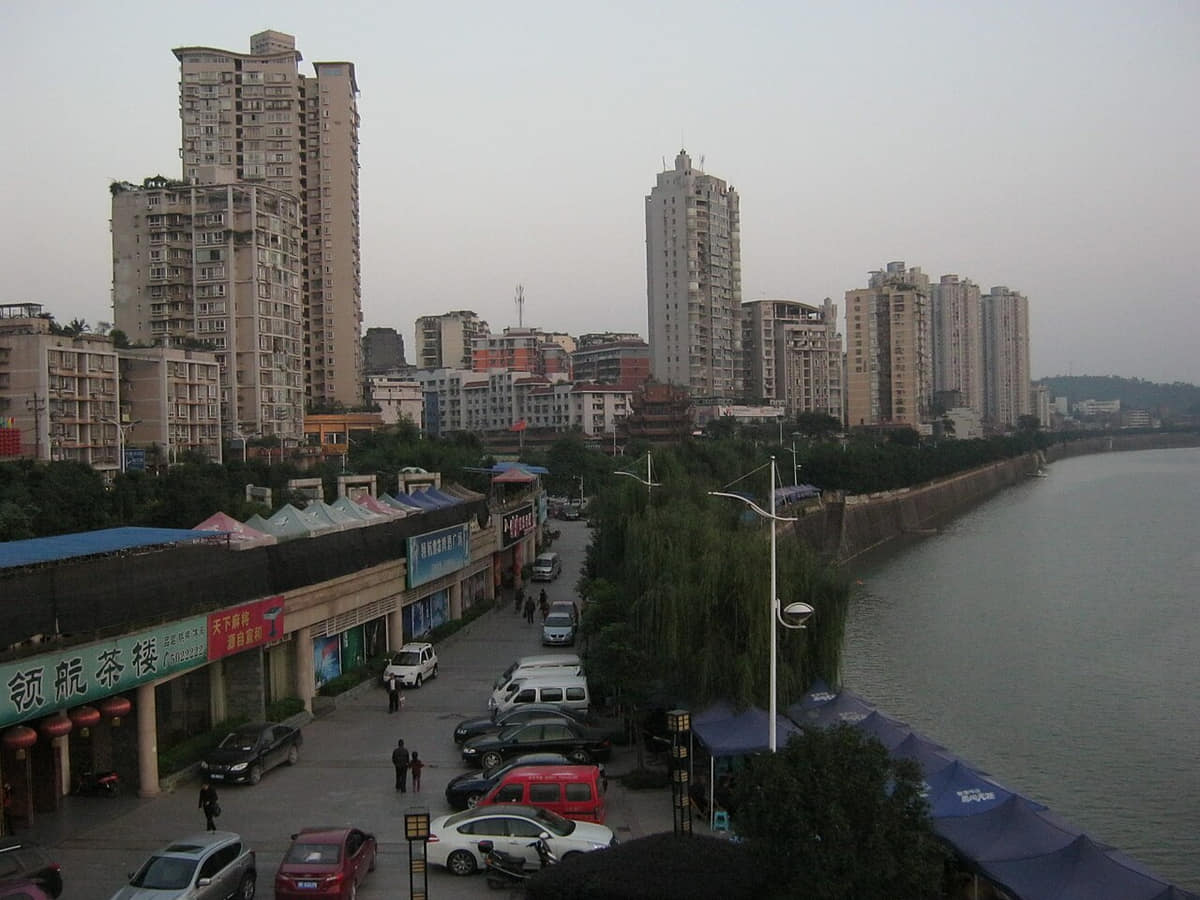
Neijiang is not one compact destination but five connected county-level landscapes. Shizhong and Dongxing meet around the Tuo River urban core; Longchang preserves stone-arch and post-road settings; Zizhong combines historic streets, temples, markets, farms, and river landings; Weiyuan adds upland towns, schools, reservoirs, industry, and the Shiban River landscape. Read the municipality at these different scales.
The Sweet City label is useful only when unpacked. Sugarcane fields, family presses, boiling sheds, seasonal labor, boats, warehouses, credit, confectionery, alcohol production, factories, the Chengdu–Chongqing Railway, changing markets, and declining cultivation form a long but discontinuous system. Present-day Neijiang should not be reduced to a frozen sugar-industry past.
Art and built heritage provide another route. Zhang Daqian's local memory is sustained through documents, exhibitions, museums, teaching, and later artistic networks; Shengshui and Xianglong require close attention to rock-cut sculpture and conservation; Longchang's arches connect stone craft with roads and civic memory; Zizhong's temples and streets make institutional history visible.
This guide separates documented history from promotional shorthand and current service claims. Image dates, monument fabric, reconstruction, opening conditions, river safety, food hygiene, allergies, school privacy, and county-to-county difference are labeled where relevant. Conditions change, so verify access, transport, weather, flood, repair, and operating information locally before a visit.
This city-specific topic connects place, daily life, and the wider municipal landscape: Land and water.
This city-specific topic connects place, daily life, and the wider municipal landscape: Historical layers.
This city-specific topic connects place, daily life, and the wider municipal landscape: Living culture.
This city-specific topic connects place, daily life, and the wider municipal landscape: County diversity.
Eighteen rights-cleared local images connect the Tuo River city, Shengshui and Xianglong sculpture, Longchang stone arches and post roads, Dongxing irrigation and cliff tombs, Zizhong temples, markets, port, farms and food, and a dated Weiyuan school record.
This city-specific topic connects place, daily life, and the wider municipal landscape: Tuo River valley.[1][2][3][4]
Four geographic relationships define Neijiang.
This city-specific topic connects place, daily life, and the wider municipal landscape: Tuo River valley.[1][2][3][4]
This city-specific topic connects place, daily life, and the wider municipal landscape: Central-southern basin hills.[1][2][3][4]
This city-specific topic connects place, daily life, and the wider municipal landscape: Rail and road corridor.[1][2][3][4]
This city-specific topic connects place, daily life, and the wider municipal landscape: Five county-level units.[1][2][3][4]
Loading current conditions…
Forecast data: Open-MeteoPermanent residents across Neijiang Municipality
Population figures use the administrative area and source date shown below.[1][2][3][4]Hot humid summers, mild damp winters, basin cloud, and rolling hills support intensive farming.
Climate describes long-term seasonal patterns; live conditions appear separately.[1][2][3][4]Temperatures rise quickly; rain, cloud, and local elevation call for flexible outdoor plans in Neijiang.[1][2][3][4]
Hot humid summers, mild damp winters, basin cloud, and rolling hills support intensive farming.[1][2][3][4]
Clearer intervals and cooler evenings usually favor river, old-town, museum, and county routes.[1][2][3][4]
Damp cool conditions make layered clothing and indoor–outdoor route pairing practical.[1][2][3][4]
Nine evidence-led layers move from river settlement and changing names through temple carving, sugar workshops, Longchang route monuments, shipping, rail transition, and contemporary museum, planning, and urban-renewal systems.
Shengshui and Xianglong preserve evidence of Buddhist patronage and carving within a changing river-city environment. Individual date labels require inscriptions, stylistic study, conservation records, and archaeology rather than visual resemblance alone.[18][6]
Settlement recovery, field expansion, household capital, animal- or human-powered rollers, boiling, fuel, molds, storage, credit, and river transport made sugar a regional system. Workshop density and output changed by period and should not be quoted without a dated source.[11][7]
Archways recorded civic commendation, family ethics, institutions, and local stone skill along routes of movement. Their present urban settings include repair, relocated traffic, commercial fronts, utilities, and tourism; not every picturesque surface is original fabric.[5][18]
Sugar linked rural planting to mills, merchants, river landings, banks, alcohol and paper production, and distant markets. War and shifting imports created peaks and shocks. Quantitative claims should retain their date, unit, geographic scope, and source limits.[8][12]
Boat crews and trackers carried sugar, salt, grain, coal, tools, and daily goods. Chants coordinated effort and encoded hazards and social memory. Later stage versions are valuable transmission forms but should be distinguished from work performance on operating boats.[10][9]
The Chengdu–Chongqing Railway changed freight speed, market reach, factory organization, station towns, taxation, and daily mobility. It did not erase river or road systems overnight, and later sugar decline had multiple agricultural, market, cost, technical, and policy causes.[9][6]
Museums, archives, legal protection, the Zizhong historic-city plan, regional monument lists, riverfront work, parking, neighborhood services, and public-space projects show active management. Conservation quality must be judged through records, fabric, monitoring, access, and community use rather than project labels alone.[17][19][18]
Six perspectives center language and mobility; river, sugar, rail and factory labor; art and archival work; heritage craft and conservation; food work; and the distinct lives of five county-level units.
Neijiang speech belongs to the wider Sichuan Mandarin landscape, but accent, vocabulary, generation, schooling, work migration, county background, and family history differ. Avoid turning relaxed speech, spice preference, or Sweet City branding into a personality stereotype.[6][2]
Boat crews, trackers, growers, cutters, press operators, boiler workers, porters, merchants, clerks, railway staff, factory workers, and maintenance teams occupied different positions and risks. Historic industrial success should not erase injury, seasonality, gendered labor, unstable income, or environmental cost.[10][9]
Zhang Daqian's local significance is sustained by artworks, documents, museums, donors, researchers, teachers, conservators, students, and visitors. Biography, attribution, artistic school, market reputation, local commemoration, and present educational use are related but not identical claims.[16][5]
Quarrying, carving, joining, roofing, scaffolding, surveying, photography, condition mapping, drainage, environmental control, fire prevention, documentation, and routine cleaning make heritage visible. Credit both historic makers and present custodians, and do not confuse reconstruction with surviving fabric.[18][13]
Planting, irrigation, harvest, animal care, food processing, early-morning purchasing, noodle prep, frying, cleaning, refrigeration, delivery, school meals, tourism service, and waste handling form daily food systems. A destination dish is the visible end of a much larger labor chain.[15][11]
Shizhong, Dongxing, Longchang, Zizhong, and Weiyuan contain central neighborhoods, market towns, villages, schools, factories, farms, heritage sites, reservoirs, roads, and migrant households in different proportions. No skyline, landmark, cuisine, or single interview can represent the whole municipality.[2][5]
Twelve entries place beef and rabbit noodles, candied fruit, sugar cake, fried rice cake, fish, duck, tofu, peanut brittle, fermentation, markets, schools, canteens, and home meals within technique, labor, safety, allergies, sourcing, and variation.
Noodle alkalinity, blanching time, beef cut, braising, stock, chile, pepper, oil, herbs, salt, holding temperature, bowl assembly, breakfast rhythm, price, allergens, and shop variation matter. Ask about spice, offal, peanuts, sesame, and cross-contact where relevant.[5][15]
Rabbit sourcing, bone control, cutting, frying, chile-bean paste, pepper, aromatics, braising, holding temperature, noodle texture, portion, spice, kitchen separation, and regional naming vary. A local name does not imply one standardized recipe.[15]
Fruit maturity, peeling, cutting, blanching, sugar curing, concentration, heating, drying, texture, cleanliness, storage, packaging, labeling, dental and metabolic considerations, and workshop variation turn sweetness into a production process.[7][11]
Rice or rice flour, soaking, grinding, fermentation or leavening, sweetness, candied-fruit additions, molds, steaming, cooling, moisture, hygiene, shelf life, packaging, and recipe variation determine quality. Confirm ingredients if avoiding gluten cross-contact or additives.[5][15]
Rice mixture, soaking, grinding, filling or seasoning, shaping, oil type, temperature, batch turnover, frying time, draining, serving heat, sanitation, allergens, and vendor practice control texture. File the name as a place-linked tradition, not a guaranteed geographic standard.[5][15]
Fish species and lawful source, freshness, scoring, frying, aromatics, chile-bean paste, fermented or preserved ingredients, reduced sauce, bones, heat control, oil, salt, attribution stories, and restaurant variation should be separated. A commemorative name is not proof of authorship.[5][16]
Species identification, protected-species rules, fishing restrictions, aquaculture or purchase records, water quality, cold chain, freshness, bones, kitchen separation, cooking temperature, chile and oil levels, and waste handling take priority over vague claims of wild fish.[5][10]
Duck source, cleaning, blanching, master-stock maintenance, spice balance, salinity, simmering, doneness, cooling, refrigeration, slicing, bones, reheating, stall hygiene, and shop variation shape the product. Reused brine requires disciplined temperature and contamination control.[5][15]
Soybean variety, soaking, grinding, filtering, boiling, coagulant, water, temperature, curd handling, pressing, freshness, sanitation, storage, frying or braising, allergens, and kitchen method determine texture. Heritage stories do not replace current production records.[15][17]
Peanut quality, roasting, skin removal, sugar syrup stage, temperature, mixing, pressing, cutting, cooling, crispness, humidity, allergen labeling, packaging, rancidity control, shelf life, and maker identity matter. The gallery records one Gaolou producer, not every local version.[15][17]
Soy or vegetables, salt, starter, vessels, airflow, temperature, time, water activity, acidity, cleanliness, mold control, traceability, labeling, refrigeration after opening, and workshop or household variation matter. Listed traditional techniques still operate under present food-safety duties.[14][15]
Produce markets, breakfast stalls, farm shops, school and factory canteens, family kitchens, delivery, rice, noodles, vegetables, tofu, eggs, meat, soups, fruit, price, opening hours, nutrition, allergies, accessibility, waste, and food safety describe everyday eating more fully.[15][2]
Three routes pair the core city with contrasting county-level landscapes.
Sugarcane linked climate, farms, mills, transport, labor, trade, taste, and industrial change across the Tuo River hills.
Read the story