
Published and indexedVersion 1.1.0

Nanchong 南充

Sichuan Province · Sichuan Province, Southwest China

A Jialing River municipality where Langzhong's old-city fabric, silk history, river transport, county agriculture, examination culture, and a large dispersed population produce multiple centers.
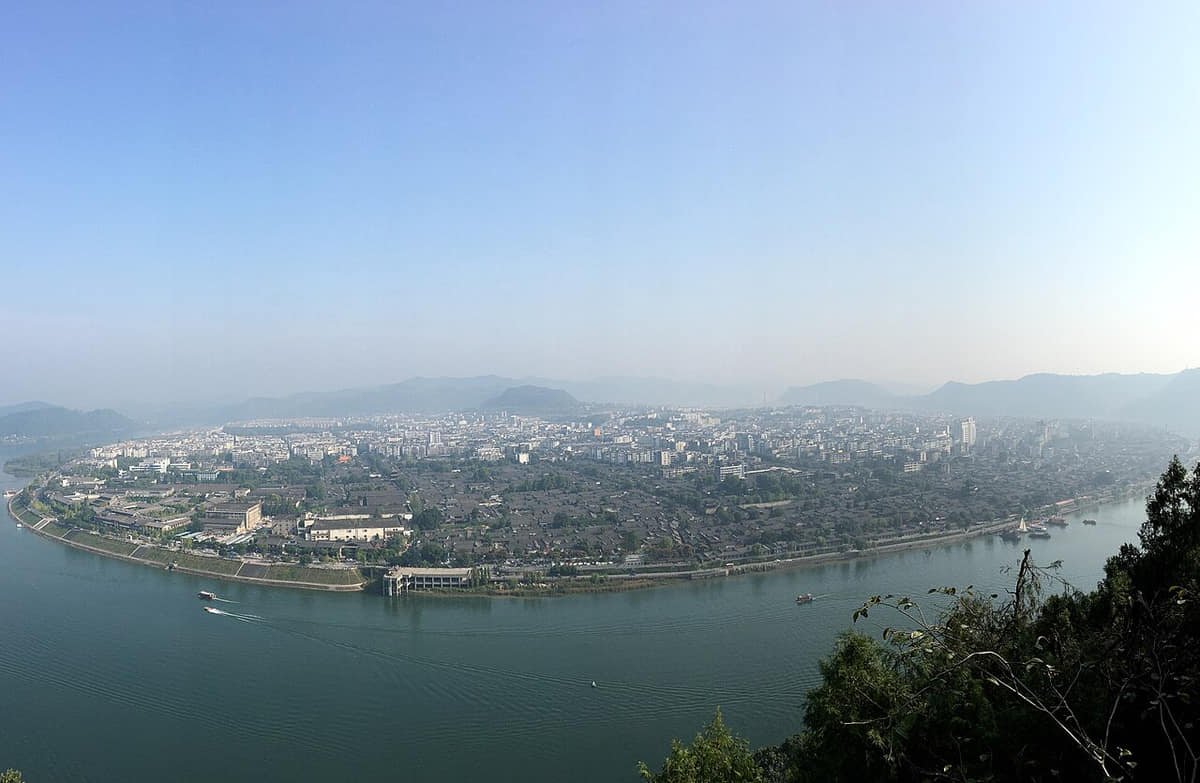
Aerial view of Langzhong and the Jialing River
Photo: Panzer VI-II · source · CC BY-SA 4.0

At a glance

Region
Sichuan Province[1][2][3][4]
Administrative type
3 districts, 5 counties, and 1 county-level city[1][2][3][4]
Time zone
China Standard Time (UTC+8)[1][2][3][4]
Population
5.489 million(End of 2024)[1][2][3][4]
Climate
Humid subtropical monsoon climate[1][2][3][4]
Guide scope
Complete municipal coverage across 3 districts, 5 counties, and 1 county-level city[1][2][3][4]

Understand Nanchong through connected city and county landscapes

Nanchong is a nine-part municipality rather than one old town. Shunqing, Gaoping, and Jialing form the central urban river system; Langzhong is a separate county-level city; Nanbu, Yingshan, Peng'an, Yilong, and Xichong each add their own towns, farms, reservoirs, routes, industries, public institutions, and heritage. The county-level map is therefore part of the story, not a navigation accessory.

The Jialing River organizes settlement, bridges, water supply, flood management, farming, former navigation, scenery, and present public space, but it does not make every place alike. Reservoir systems around Shengzhong Lake, river bends at Langzhong and Peng'an, central embankments, tributaries, county hills, and shoreline restoration need to be read at different scales.

Nanchong's historical identity is layered: river settlement and regional administration; Shunqing and Langzhong institutions; examination culture; Chen Shou and historical writing; mulberry, sericulture, weaving, trade, vocational training, and the Liuhe factory; county markets, agriculture, railways, and contemporary services. Silk is a labor and knowledge system, not simply a decorative slogan.

Read every gallery image and named place as dated evidence. Buildings may contain original, repaired, reconstructed, and newly serviced parts; museums change exhibitions; rivers change level; stations change schedules; food varies by maker; and biographies require sourced chronology. This guide explains cultural practice and material history without adopting a political position.

Land and water

This city-specific topic connects place, daily life, and the wider municipal landscape: Land and water.

Historical layers

This city-specific topic connects place, daily life, and the wider municipal landscape: Historical layers.

Living culture

This city-specific topic connects place, daily life, and the wider municipal landscape: Living culture.

County diversity

This city-specific topic connects place, daily life, and the wider municipal landscape: County diversity.

Location, boundary, and 3D buildings

This city-specific topic connects place, daily life, and the wider municipal landscape: Middle Jialing River.[1][2][3][4]

Loading city geometry…
County boundaries: © OpenStreetMap contributors · ODbL

Geography and the shape of the city

Four geographic relationships define Nanchong.

Middle Jialing River

This city-specific topic connects place, daily life, and the wider municipal landscape: Middle Jialing River.[1][2][3][4]

Northeastern basin hills

This city-specific topic connects place, daily life, and the wider municipal landscape: Northeastern basin hills.[1][2][3][4]

County-town network

This city-specific topic connects place, daily life, and the wider municipal landscape: County-town network.[1][2][3][4]

Nine county-level units

This city-specific topic connects place, daily life, and the wider municipal landscape: Nine county-level units.[1][2][3][4]

Weather now

Loading current conditions…

Forecast data: Open-Meteo

Population

5.489 million

Permanent residents across Nanchong Municipality

Population figures use the administrative area and source date shown below.[1][2][3][4]

Climate

Humid subtropical monsoon climate

Warm humid summers, mild cloudy winters, and rolling basin hills structure the Jialing River agricultural region.

Climate describes long-term seasonal patterns; live conditions appear separately.[1][2][3][4]

Seasonal patterns

March–May

Spring

Temperatures rise quickly; rain, cloud, and local elevation call for flexible outdoor plans in Nanchong.[1][2][3][4]

June–August

Summer

Warm humid summers, mild cloudy winters, and rolling basin hills structure the Jialing River agricultural region.[1][2][3][4]

September–November

Autumn

Clearer intervals and cooler evenings usually favor river, old-town, museum, and county routes.[1][2][3][4]

December–February

Winter

Damp cool conditions make layered clothing and indoor–outdoor route pairing practical.[1][2][3][4]

A short history of the city

Nine evidence-led layers move from river settlement and imperial administration through Langzhong, examination culture, Chen Shou, silk labor, factories, transport, and contemporary heritage and river stewardship.

Image credits and licenses
  1. River terraces and the wider Ba-region context

    The middle Jialing corridor supported settlement, cultivation, fishing, crossing points, exchange, and links between basin hills. Archaeological chronology, site boundaries, finds, environment, and later disturbance must be separated from broad cultural labels.[5][3]

  2. Counties, prefectural institutions, markets, and routes

    Shunqing and related administrative histories show how offices, walls, streets, taxation, schools, temples, ferries, post roads, markets, grain, and surrounding villages formed a regional service system whose boundaries and names changed over time.[8][9]

  3. Regional administration and a living old-city fabric

    Langzhong accumulated administrative, commercial, domestic, religious, educational, and defensive spaces. Today's roofs and lanes include surviving fabric, repair, adaptation, tourism, utilities, residents, businesses, and newer construction, so preservation is an urban-management task.[5][24]

  4. Gongyuan, candidates, writing, travel, and selection

    The examination hall opens a route into recruitment rules, regional testing, candidate travel and lodging, written forms, invigilation, architecture, social opportunity and exclusion, archival evidence, later institutional change, restoration, and museum interpretation.[5][8]

  5. Chen Shou, historical writing, and Wanjuanlou

    Chen Shou's work connects Nanchong with the production and later reception of historical texts. The present Wanjuanlou complex is a twentieth-century reconstruction linked to earlier place memory; manuscripts, editions, scholarship, commemoration, and building history should not be collapsed into one legend.[20][8]

  6. Mulberry, silkworms, household work, workshops, and trade

    Silk depended on land, mulberry varieties, eggs, rearing rooms, temperature, disease control, gendered and household labor, reeling, twisting, dyeing, weaving, tools, water, fuel, credit, quality standards, markets, transport, and changing demand.[10][11]

  7. Factories, vocational training, and Liuhe industrial memory

    Mechanized reeling and weaving, factory buildings, power, machinery, worker recruitment, dormitories, training, wages, safety, product design, export, enterprise change, and later heritage use reshaped the silk system without erasing household and rural production.[12][13]

  8. Road, rail, bridges, airport, and a more distributed city

    Transport changed travel time, labor markets, schooling, agricultural distribution, station districts, river crossings, industrial locations, and county links. A railway or airport image records infrastructure, not a promise of current routes, schedules, capacity, or equal access.[27][5]

  9. Museums, intangible heritage, river restoration, and county planning

    Current Nanchong manages collections, performance transmission, old-city life, industrial remains, monuments, reservoirs, shorelines, biodiversity, transport, public services, tourism, disaster risk, and regional growth at once. Evidence must distinguish a plan, a completed project, a current service, and a cultural aspiration.[7][23][27]

People, language, and everyday rhythms

Six perspectives center language and nine local contexts; river, silk, farm, factory, and service labor; performers and makers; urban infrastructure; county households; and neutral, sourced biography.

Language, mobility, and nine local contexts

Southwestern Mandarin and Standard Mandarin coexist with household, school, workplace, media, migration, age, and neighborhood differences. A resident of central Shunqing, old Langzhong, lakeside Nanbu, riverine Peng'an, Yilong, Xichong, or Yingshan should not be reduced to one city personality.[5][2]

River, silk, farm, factory, and service work

Boat work, farming, mulberry care, silkworm raising, reeling, weaving, maintenance, construction, transport, kitchens, shops, schools, hospitals, offices, logistics, tourism, and digital services reveal a labor system wider than heritage branding.[10][12][25]

Performers, craftspeople, and transmission

Giant puppetry, lantern opera, shadow puppetry, silk carpet, bamboo weaving, paper cutting, music, costumes, stage mechanics, scripts, rehearsal, touring, teaching, apprentices, institutions, audiences, documentation, and income all shape whether a practice continues.[27][7]

Urban neighborhoods and public infrastructure

Apartments, older lanes, resettlement areas, villages absorbed by urban growth, schools, clinics, parks, markets, stations, buses, flood works, waste systems, aging, childcare, accessibility, rent, and commute time structure daily life beyond scenic districts.[21][22][23]

County towns, villages, and changing households

Agricultural seasons, reservoir rules, road access, rail stations, schooling, medical travel, care work, migration, remittances, e-commerce, small businesses, land decisions, extreme weather, and household preference create different choices across Nanbu, Peng'an, Yilong, Xichong, and Yingshan.[16][14][19]

Public figures, museums, and neutral biography

Chen Shou, Sima Xiangru, Zhang Fei commemoration, Zhu De, Zhang Lan, and other named figures belong to different eras and evidence types. Dates, writings, objects, buildings, institutions, later commemoration, contested claims, and present interpretation should be sourced separately and described without political endorsement.[20][18][14]

Culture and daily life

Image credits and licenses

Silk as knowledge and industrial heritage

Mulberry cultivation, silkworm care, reeling, weaving, pattern, dye, factory technology, vocational education, worker memory, design, repair, archives, machinery, buildings, markets, and contemporary products connect rural and urban Nanchong.[10][11][12]

North Sichuan giant puppetry

Large articulated figures require carving, painting, costumes, internal controls, coordinated manipulation, music, voice, stage space, transport, maintenance, rehearsal, skilled ensembles, institutional support, audiences, and safe transmission rather than a single spectacular photograph.[21]

North Sichuan lantern opera

A regional theatrical practice involving vocal style, percussion and melody, roles, gesture, costume, comic and narrative repertoires, small-stage conditions, local language, performers, teaching, documentation, adaptation, and present audiences.[22]

Shadow puppetry and mobile stages

Cut figures, translucent materials, carving, coloring, joints, rods, screen, lamp, music, narration, troupe organization, village and town venues, transport, repair, archives, copyright in new works, and changing media all belong to the practice.[23]

Langzhong old-city and festival life

Courtyards, lanes, temples, shops, homes, kitchens, schools, museums, festivals, decorations, visitors, sanitation, deliveries, prices, crowd control, fire safety, residents, and off-season routines show culture as ordinary urban management as well as ceremony.[24][5]

Gongyuan and examination memory

Architecture and display open questions about learning, calligraphy, texts, regional candidates, examination rules, bureaucracy, social mobility, exclusion, travel, lodging, archives, later education, restoration, tourism, and popular historical imagination.[5][24]

Chen Shou and historical writing

The local connection is strongest when editions, citations, historiography, later scholarship, translation, libraries, museums, teaching, the reconstruction history of Wanjuanlou, and the difference between historical text and later fiction remain visible.[20]

Bamboo weaving, paper cutting, silk carpet, and household craft

Material selection, tools, design, apprenticeship, household work, gender, time, market price, cooperatives, exhibitions, tourism, online sales, intellectual property, occupational health, and maker attribution matter alongside visual pattern.[23][24]

Jialing River markets and movement

Ferries, former boat routes, bridges, embankments, market streets, fish and farm produce, warehouses, stations, buses, migrant travel, leisure paths, flood seasons, shoreline regulation, and ecological restoration connect the river to social life.[6][7]

County calendars without stereotypes

Temple fairs, family rituals, seasonal foods, farming tasks, school calendars, market days, weddings, funerals, public festivals, religious practices, tourism events, and new community programs vary by place, generation, institution, and household; no one list represents every resident.[14][18][16]

Food and local flavor

Twelve entries place rice noodles, liangfen, guokui, vinegar, beef, cold noodles, preserved vegetables, steamed bread, hot liangmian, fish, county produce, and daily food services within technique, labor, sourcing, safety, allergies, price, and maker variation.

Image credits and licenses
A breakfast system of rice noodles, broth, toppings, and speed

Nanchong rice noodles

Rice selection, soaking, milling, extrusion or purchased noodles, hydration, blanching, broth, beef, mutton, chicken or vegetarian toppings, chile, salt, herbs, bowl temperature, portion, queue, price, hygiene, allergens, and shop variation determine the meal. The name does not guarantee one recipe.[25]

Pea starch, gel structure, cutting, and layered seasoning

North Sichuan liangfen

Peas or starch, grinding and filtering where practiced, starch-water ratio, heating, stirring, setting, cooling, cutting, chile oil, aromatics, soy or vinegar, salt, sweetness, texture, storage, cross-contact, sanitation, and maker variation matter. Verify whether a shop makes its own jelly.[25][26]

Hot crisp bread meeting cool, soft, spicy filling

Guokui with liangfen

Flour, leavening, dough rest, shaping, griddle or oven heat, oil, crust, fresh-cut liangfen, sauce, assembly time, leakage, serving temperature, sesame or other allergens, vendor hygiene, holding time, and takeaway packaging control contrast and safety.[25][26]

Grain fermentation, microbial management, aging, and acidity

Baoning vinegar

Raw grains and adjuncts, starter, steaming, saccharification, alcoholic and acetic fermentation, vessels, temperature, aeration, time, aging, filtration, acidity, aroma, hygiene, traceability, labeling, workshop history, and contemporary regulation should be distinguished. Heritage status does not exempt food safety.[25][24]

A commemorative product name with multiple cuts and processes

Zhangfei beef

Beef source, cut, curing or braising, spice, salt, heat, drying, cooling, slicing, packaging, shelf life, cold chain, shop identity, brand history, allergens, and product variation matter. The name's historical association should not be treated as proof that a named ancient figure created the food.[25][24]

Cooked noodles, controlled cooling, oiling, and fresh seasoning

Yingshan cold noodles

Wheat noodles, cooking time, draining, cooling method, oil separation, bean sprouts or vegetables, chile, sesame, soy, vinegar, garlic, sugar, portion, ambient temperature, holding time, refrigeration, allergens, sanitation, and stall variation shape quality and safety.[25][3]

Salt, vegetables, fermentation, storage, and strong seasoning

Qingju preserved winter vegetables

Vegetable species, harvest, cleaning, cutting, salt ratio, vessel, fermentation or curing time, temperature, moisture, microbial safety, rinsing, portion, cooking use, sodium, packaging, traceability, and household or factory method determine the product.[25][11]

Flour fermentation and steaming rather than one fixed sweetness

Baoning steamed bread

Flour strength, water, starter or yeast, sugar where used, kneading, proofing, shaping, steaming, condensation, cooling, crumb, sweetness, fillings where present, storage, reheating, hygiene, wheat allergens, and maker variation should be recorded rather than idealized.[25][24]

A locally named noodle form whose service temperature needs explanation

Langzhong hot liangmian

Noodle type, cooking and cooling sequence, sauce temperature, toppings, chile, oil, vinegar, garlic, meat or vegetarian additions, portion, rapid assembly, holding time, hygiene, allergens, shop vocabulary, and family variation matter. Ask the maker how the local name is used.[25][24]

Legal source and species identification before river romance

Jialing fish dishes

Species, protected status, fishing restrictions, aquaculture or purchase record, water quality, freshness, cold chain, bones, kitchen separation, cooking temperature, oil and chile level, allergies, waste, and seasonal availability take priority over vague claims of wild or river-caught fish.[6][7]

Citrus, grains, vegetables, tofu, eggs, meat, and preserved foods

County produce and household meals

Nanbu citrus, Xichong and Yilong farm produce, Peng'an river-valley crops, Yingshan market goods, household gardens, rice, wheat, maize, beans, greens, tofu, eggs, meat, soups, pickles, season, price, labor, nutrition, and household preference describe daily eating better than a signature-dish list.[16][19][14]

Food as a daily service and distribution system

Markets, stations, schools, canteens, and takeaway

Breakfast shops near stations, produce markets, school and factory canteens, hospital meals, family kitchens, restaurants, delivery, opening hours, queue time, affordability, accessibility, nutrition, allergies, sanitation, refrigeration, packaging, waste, and worker conditions complete the food story.[26][27]

Landmarks and architecture

Image credits and licenses

Langzhong Ancient City

A living protected urban landscape of lanes, courtyards, towers, institutions, homes, shops, religious sites, museums, residents, visitors, utilities, drainage, fire safety, deliveries, accessibility, restoration, reconstruction, and view corridors. Verify current entry and opening arrangements place by place.[5][24]

Han Huanhou Shrine

A commemorative temple and museum complex associated with Zhang Fei, combining buildings, courtyards, inscriptions, objects, ritual practice, historical narrative, later repairs, trees, visitor services, crowd management, and local memory. Separate documented history from literary and popular retellings.[5][24]

Langzhong Gongyuan

An examination-history site through which architecture, candidate movement, writing practices, rules, education, bureaucracy, selection, social inequality, archives, restoration, museum display, accessibility, and present tourism can be read together without claiming every visible part is original.[5][24]

Nanchong Museum and local museum network

A city collection system that should connect archaeology, local history, silk, river life, manuscripts, art, folk practice, county finds, conservation laboratories, storage, provenance, loans, temporary exhibitions, education, digital access, accessibility, and changing opening schedules.[5][23]

Xishan and Wanjuanlou

A landscape of hill paths, reconstructed commemorative architecture, Chen Shou interpretation, editions and scholarship, trees, viewpoints, bridges, urban edges, slope and fire safety, accessibility, maintenance, and visitor use. The current building must be identified as a twentieth-century reconstruction.[20][8]

Wuliang Pagoda and Gaoping riverbank

A tall landmark within a wider river setting of historic fabric, later repair, plaza, vegetation, shoreline, bridges, flood control, urban views, public activity, lighting, transport, and legal protection. Structural history and visitor access need site records.[5][7]

Liuhe silk factory and Gaoping silk memory

An industrial-heritage landscape of factory buildings, machinery, power, reeling and weaving processes, technical education, workers, management, housing, transport, product samples, archives, environmental effects, workplace safety, later reuse, and the continuing silk economy.[12][11][13]

Shengzhong Lake

A large reservoir and county landscape involving tributary hydrology, storage, shoreline, islands, settlements, agriculture, fisheries, biodiversity, water quality, flood and drought management, navigation or recreation rules, rescue capacity, tourism facilities, seasonal weather, and long-term stewardship.[17][16]

Mount Yuji cliff sculpture

A monumental rock-cut heritage site whose iconography, carving phase, stone, pigments or coatings, shelter, water paths, cracking, previous repair, ritual use, access, visitor distance, documentation, boundaries, and conservation monitoring require specialist interpretation.[16]

Yongan Temple, Lifeng Temple, and Nanbu's rural monuments

A dispersed network rather than one scenic compound. Timber and masonry fabric, bracket systems, roof repair, ritual use, village context, roads, vegetation, drainage, termites, fire risk, security, legal designation, community care, and visitor information differ at each site.[16]

Peng'an river bend, Zhouzi old town, and Xiangru heritage

A river-county landscape combining a major meander, islands, seasonal cattle crossing, floodplain ecology, old streets, residences, markets, literary commemoration, bridges, rail access, tourism, farming, water safety, animal welfare, and changing river conditions.[14][15]

Yilong, Xichong, and Yingshan county heritage routes

Yilong's rural residence and mountain settings, Xichong's farms and historic residences, and Yingshan's Taipeng Mountain, towns, stations, schools, markets, roads, forests, ritual sites, public services, conservation, and household life require separate local itineraries rather than one generalized rural image.[18][19][6]

Ways to explore the city

Three routes pair the core city with contrasting county-level landscapes.

Field route

Nanchong Museum → Jialing waterfront → old commercial streets

Use this sequence to compare the core city with a distinct county-level landscape.[1][2][3][4]

Field route

Langzhong walls → Zhangfei Temple → Gongyuan

Use this sequence to compare the core city with a distinct county-level landscape.[1][2][3][4]

Field route

Yilong county landscape → silk memory → Peng'an river town

Use this sequence to compare the core city with a distinct county-level landscape.[1][2][3][4]

Continue with a local story

Documentary image for a local story about Nanchong
Photo: Panzer VI-II · source · CC BY-SA 4.0
Featured story

How did the Jialing River make Nanchong a silk city?

Mulberry fields, household labor, workshops, trade routes, river transport, factories, and fashion linked rural counties with urban markets.

Read the story

Sources, revision, and publication status

v1.1.0
Last content update
Publication statusPublished
Image verificationImage rights and place accuracy are approved.
Map verificationMap license, version, and administrative code are verified.

Numbered reference sources

  1. Nanchong Municipal Government — official portal
  2. Nanchong — reviewed population and statistical reference
  3. Sichuan Local Chronicles — Nanchong records
  4. China Meteorological Administration — climate reference
  5. Sichuan Government — Nanchong geography, Jialing River, silk, historic places, and city profile
  6. Sichuan Government — Nanchong Jialing River corridor, Langzhong, Peng'an, Shengzhong Lake, Yilong, Xichong, and Yingshan destinations
  7. Sichuan Government — Jialing River shoreline restoration, planning, protection zones, and governance
  8. Sichuan Local Chronicles — Shunqing prefecture, urban history, routes, and institutions
  9. Sichuan Local Chronicles — Jialing District geography, history, settlements, and local context
  10. Sichuan Local Chronicles — mulberry, sericulture, weaving, trade, and Nanchong silk history
  11. Sichuan Local Chronicles — Gaoping silk production, enterprise history, and local industry
  12. Sichuan Local Chronicles — Liuhe silk factory, buildings, machinery, workers, and industrial memory
  13. Sichuan Local Chronicles — Nanchong silk vocational education and technical transmission
  14. Sichuan Local Chronicles — Peng'an Jialing River, Zhouzi old town, Xiangru heritage, and county landscape
  15. Sichuan Local Chronicles — Peng'an cattle crossing, river islands, husbandry, ecology, and seasonal viewing
  16. Nanbu County chronicle — Shengzhong Lake, Mount Yuji sculpture, Lifeng Temple, Yongan Temple, and county heritage
  17. Sichuan Water Resources — Shengzhong Lake hydrology, protection, shoreline, and water-resource role
  18. Sichuan Government — Yilong rural heritage landscape, historic residence, museum, farmland, and visitor services
  19. Sichuan Local Chronicles — Xichong history, agriculture, settlements, people, and county context
  20. Sichuan Local Chronicles — Chen Shou, Records of the Three Kingdoms, Wanjuanlou history, destruction, and reconstruction
  21. China ICH — North Sichuan giant puppetry, performance structure, transmission, and Nanchong protection unit
  22. China ICH — North Sichuan lantern opera, music, staging, repertoire, and transmission
  23. Sichuan Culture and Tourism — giant puppetry, lantern opera, silk carpet, shadow puppetry, and multilingual cultural exchange
  24. Sichuan Culture and Tourism — Langzhong festival practices, public programs, heritage demonstrations, and museums
  25. Sichuan Local Chronicles — North Sichuan liangfen, Nanchong rice noodles, Qingju preserved vegetables, ingredients, and preparation
  26. Sichuan Local Chronicles — North Sichuan liangfen craft, shops, supply chains, employment, and contemporary business
  27. Northeastern Sichuan spatial plan — city groups, transport, Jialing corridor, county agriculture, ecology, heritage, and public services
Report a correction