
Land and water
This city-specific topic connects place, daily life, and the wider municipal landscape: Land and water.
Sichuan Province · Sichuan Province, Southwest China
A Yangtze–Tuo river-port city where historic fermentation cellars, shipping, southern Sichuan markets, longan groves, old towns, and county hills create a layered identity.
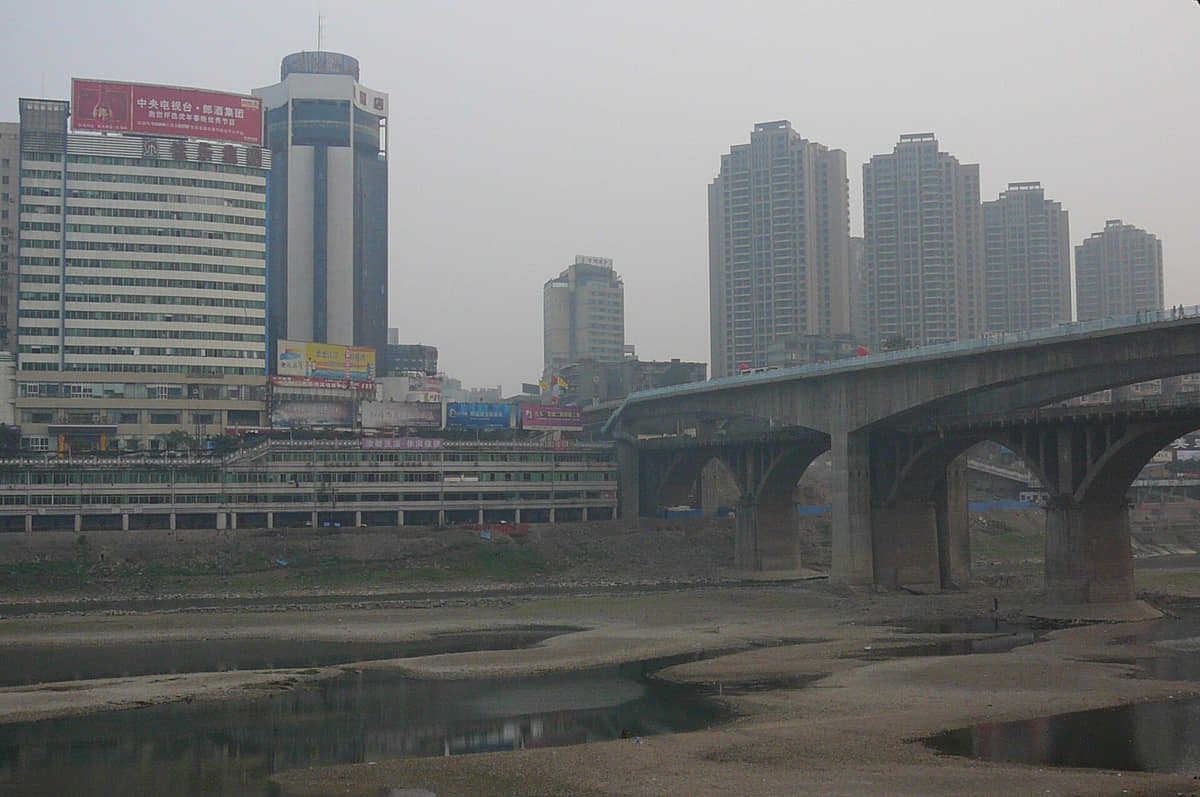
Luzhou stands where the Tuo River joins the Yangtze in southern Sichuan. River terraces, humid hills, ports, bridges, old commercial streets, modern logistics, farmland, forest, and seven county-level units make it both a river city and a large municipal landscape extending toward Chongqing, Guizhou, and Yunnan.
Its best-known product is baijiu, but the meaningful subject is an entire system: grain and starter culture, microbial pit environments, skilled labor, inherited techniques, workshops, regulation, trade, branding, drinking customs, public health, and continuing conservation of production sites.
The wider municipality adds Yaoba's townscape, Fenshui oil-paper umbrellas, Lu County's stone and temple heritage, Hejiang's cliff tombs and litchi country, Xuyong's mountain routes, Gulin's brewing districts and Early Cretaceous track sites, plus villages, markets, schools, forests, reservoirs, and changing transport corridors.
A complete exploration therefore follows connections rather than slogans: rivers before port fame, workers and microbes before bottle brands, materials before craft souvenirs, residents before ancient-town scenery, lawful sourcing before river-food reputation, and county evidence before a city-center stereotype.
This city-specific topic connects place, daily life, and the wider municipal landscape: Land and water.
This city-specific topic connects place, daily life, and the wider municipal landscape: Historical layers.
This city-specific topic connects place, daily life, and the wider municipal landscape: Living culture.
This city-specific topic connects place, daily life, and the wider municipal landscape: County diversity.
Eighteen rights-cleared documentary and scientific images connect Luzhou's two-river geography, port, bridges, historic cellars, distillation, oil-paper umbrellas, ancient towns and routes, monuments, county heritage, hydropower landscape, and dinosaur-track research.
This city-specific topic connects place, daily life, and the wider municipal landscape: Yangtze and Tuo rivers.[1][2][3][4]
Four geographic relationships define Luzhou.
This city-specific topic connects place, daily life, and the wider municipal landscape: Yangtze and Tuo rivers.[1][2][3][4]
This city-specific topic connects place, daily life, and the wider municipal landscape: Southern basin hills.[1][2][3][4]
This city-specific topic connects place, daily life, and the wider municipal landscape: Port and tributary corridors.[1][2][3][4]
This city-specific topic connects place, daily life, and the wider municipal landscape: Seven county-level units.[1][2][3][4]
Loading current conditions…
Forecast data: Open-MeteoPermanent residents across Luzhou Municipality
Population figures use the administrative area and source date shown below.[1][2][3][4]Long hot summers, mild damp winters, abundant rain, and river fog support evergreen landscapes and fermentation environments.
Climate describes long-term seasonal patterns; live conditions appear separately.[1][2][3][4]Temperatures rise quickly; rain, cloud, and local elevation call for flexible outdoor plans in Luzhou.[1][2][3][4]
Long hot summers, mild damp winters, abundant rain, and river fog support evergreen landscapes and fermentation environments.[1][2][3][4]
Clearer intervals and cooler evenings usually favor river, old-town, museum, and county routes.[1][2][3][4]
Damp cool conditions make layered clothing and indoor–outdoor route pairing practical.[1][2][3][4]
Nine layers move from early Jiangyang settlement through the Luzhou name, river commerce, fortified and religious landscapes, brewing, modern transport, municipal reorganization, and contemporary conservation.
Archaeological sites, cliff tombs, river terraces, and later records point to long settlement and exchange. Jiangyang County was established near the Yangtze–Tuo junction in 151 BCE, creating an administrative reference that still appears in the central district's name.[5][6]
Official local chronicles date the establishment of Luzhou to the Liang period, 535–546. Administrative boundaries and ranks changed many times afterward, so the continuing name should not be mistaken for an unchanged city footprint.[5]
Historic records and protected sites document long-lived distilling workshops, including fermentation pits associated with 1573. Brewing depended on grain supply, water, starter making, pit maintenance, fuel, vessels, labor, storage, merchants, and river transport.[8][15]
River commerce, guild and shop networks, market towns, Fenshui umbrella workshops, breweries, roads, postal routes, and newer institutions overlapped. Different districts and counties participated through distinct products, labor, and travel times.[16][11]
Road, river, industrial, military, medical, and educational functions expanded under wartime pressure. Construction and relocation brought workers, students, teachers, factories, risks, shortages, displacement, and lasting institutional memories to the municipality.[3][5]
A separate Luzhou city was established in 1950 through several administrative phases; it became a prefecture-level city in 1983, and later district changes produced today's three districts and four counties. Administrative change reorganized services and urban growth.[5][2]
Container transport, aviation, roads, manufacturing, brewing, services, universities, riverfront projects, cultural institutions, heritage protection, tourism, water management, and county agriculture now overlap. Their benefits and environmental or social costs require continuing review.[2][6][1]
Luzhou's residents are better understood through language, river and market mobility, brewing and craft labor, county differences, and contemporary work than through assumptions about a drinking city.
Southwestern Mandarin and Standard Mandarin are widely used. Local speech differs along the Yangtze, Tuo, Chishui, and county corridors; vocabulary, pronunciation, minority-community languages, and code-switching vary by household, age, education, and migration.[2][5][6]
Boat crews, dockworkers, ferrymen, traders, warehouse staff, port workers, truck drivers, shopkeepers, and households connected river movement to city life. Their skills and risks changed as ferries, roads, bridges, and container logistics replaced older systems.[2][5][6]
Starter makers, pit tenders, grain handlers, steam and distillation crews, tasters, blenders, laboratory staff, cleaners, maintenance workers, warehouse teams, designers, sales staff, and growers occupy unequal positions in one industry. Brand history should not erase labor.[2][5][6]
Umbrella makers, carpenters, masons, conservators, guides, archivists, performers, market vendors, and residents keep heritage active. Preservation often depends on slow work, viable income, safe workshops, training, and control over how local culture is presented.[2][5][6]
Jiangyang, Longmatan, Naxi, Lu County, Hejiang, Xuyong, and Gulin differ in density, terrain, crop cycles, industry, transport, schools, dialect details, public services, and border connections. A municipal total contains many daily geographies.[2][5][6]
Many residents do not drink, work in alcohol, or identify with a brand. Children, students, clinicians, growers, factory workers, service employees, entrepreneurs, retirees, and migrants have different needs; alcohol-free participation and health information belong in public culture.[2][5][6]
Twelve entries place famous drinks and dishes within river ecology, grain and fruit production, county markets, technique, labor, preservation, safety, and alcohol-free everyday eating.
Grain, daqu starter, mud-pit fermentation, steaming, distillation cuts, aging, blending, standards, labeling, and sensory evaluation produce many styles and price levels. Heritage value does not make alcohol risk-free; legal-age, moderate, voluntary consumption is essential.[7][10]
Glutinous rice and other grain or sweetening components are mixed, wrapped in leaves, and steamed for long enough to develop a dense, fragrant texture. Proportions, wrapping material, steaming time, storage, and reheating vary among makers.[14]
A pale, lightly fermented or leavened rice cake is valued for soft texture and gentle sweetness. Milling, hydration, fermentation, molds, steaming, cooling, and same-day freshness distinguish skilled production from a generic white cake.[14]
Cultivar, old trees, flowering, rainfall, heat, slope, harvest timing, handling, storage, and transport determine quality. Longan and later-ripening Hejiang litchi connect city markets with orchard labor and climate risk.[5][14]
Poached or cooked chicken is cut and dressed with chile, aromatics, oil, seasoning, and sometimes nuts or sesame. Bird quality, doneness, knife work, sauce balance, resting time, and food safety matter more than maximum heat.[14]
Fish is cooked and served with a strongly flavored sauce, vegetables, chile, aromatics, and continued table heat. Species, legal source, freshness, deboning, initial cooking, sauce, and holding temperature define the result.[14]
Steaming, braising, poaching, roasting, and soups emphasize different textures. Contemporary interpretation must distinguish historical reputation from protected species, seasonal fishing restrictions, aquaculture records, sustainable sourcing, and food-safety controls.[14]
Fresh, dried, fermented, or preserved shoots require correct species, lawful harvest, peeling, blanching, bitterness control, texture management, and seasonal timing. County hills and markets create many versions rather than one municipal recipe.[14][5]
Large shared meals coordinate purchasing, butchery, steaming, frying, braising, seating, serving order, borrowed equipment, reciprocal labor, leftovers, cost, and food safety. Menus change by household and occasion.[14]
Soft bean curd, dipping sauce, rice, vegetables, soups, small meat dishes, and pickles represent everyday eating beyond festival and brand menus. Water, beans, coagulant, texture, sauce, price, and neighborhood habit all matter.[14]
Salt, brine, fermentation, drying, smoking, oil, jars, time, temperature, cleanliness, and repeated care produce condiments and stored foods. Practices vary across humid river valleys and cooler mountain counties.[14]
Breakfast stalls, fruit markets, noodle shops, family tables, canteens, tea, soups, sweets, and alcohol-free drinks support social life without requiring baijiu. Price, opening hours, accessibility, and voluntary participation shape the experience.[14][2]
Three routes pair the core city with contrasting county-level landscapes.
The cellars connect microbiology, inherited craft, labor, trade, architecture, river logistics, regulation, and changing consumption.
Read the story