
Where is Hefei, China?
Hefei is the capital of Anhui Province in the Jianghuai region of eastern China. Its nine county-level units include four urban districts, four counties and county-level Chaohu City beside Chaohu Lake.
Anhui Province · East China
Hefei, China, is Anhui's capital and a nine-unit municipality shaped by Chaohu Lake, Swan Lake, research institutions, manufacturing, rail connections and older county networks.
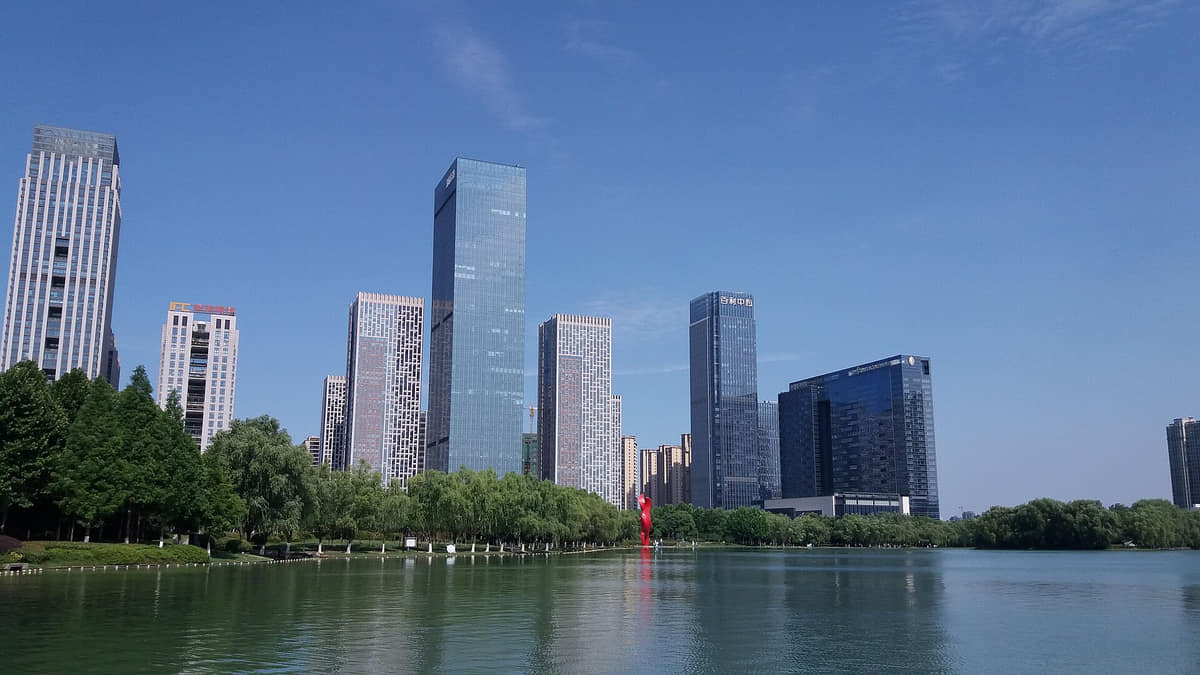
Hefei lies in central Anhui across the transition between the Yangtze and Huai river systems, extending from dense urban districts to counties, towns, farmland, low hills and the Chaohu lakeshore. It administers Yaohai, Luyang, Shushan and Baohe districts; Changfeng, Feidong, Feixi and Lujiang counties; and county-level Chaohu City. A complete account must keep all nine units visible rather than treating the Swan Lake skyline as the whole municipality.
The name Hefei is recorded in early historical texts, and a county was established more than two millennia ago, but the city was repeatedly rebuilt and redefined. Military crossroads, the former Luzhou administrative centre, Bao Zheng memory, late-Qing officials and armies, twentieth-century provincial institutions, industrialization and metropolitan expansion are separate layers—not one unbroken old-town scene.
The long-term climate is humid subtropical monsoon with a north–south transitional character: four distinct seasons, changeable spring weather, concentrated summer rain including the plum-rain period, a comparatively short autumn and cold winter spells. Climate is not live weather; temperature, storms, heat, flood, lake conditions and air quality must be checked separately for the actual date and location.
The official statistical bulletin reports 10.002 million permanent residents at the end of 2024. That municipal measure includes district, county and county-level-city residents and should not be mixed with registered population, central-city counts or wider urban-region estimates. Daily experience varies among research campuses, manufacturing zones, transport hubs, older neighbourhoods, new housing, market towns, farms and lakeside communities.
Hefei is the capital of Anhui Province in the Jianghuai region of eastern China. Its nine county-level units include four urban districts, four counties and county-level Chaohu City beside Chaohu Lake.
Hefei is known for science and research institutions, advanced manufacturing and transport growth. Its wider identity also includes Chaohu Lake, Swan Lake, county towns, Three Kingdoms history, Anhui museums and regional food.
Research, education, engineering, manufacturing, and public institutions form a connected innovation landscape.
Language, food, water systems, farming, and routes reflect a position between major river basins.
Chaohu expands the city story into wetlands, fisheries, towns, ecology, and restoration.
Rapid growth creates planned centers, metro corridors, campuses, industry, and unevenly changing neighborhoods.
Twenty-seven locally hosted, rights-cleared images connect lake and skyline, museums and collection objects, memorial and religious places, a water town, university life, everyday streets, transport, adaptive reuse, parks and a county food. Captions preserve dates and uncertainty and distinguish visible evidence from current conditions, institutional claims, object records and political endorsement.
The built-up area spreads across rolling plains and transport corridors, while the municipality extends through counties and towns to the broad northern and western shores of Chaohu Lake.[1][2][3][4]
A watershed position, Chaohu Lake, rolling plains, reservoirs, transport corridors, and a nine-unit municipality define Hefei.
Hefei lies between the Yangtze and Huai river systems, making water transfer, drainage, reservoirs, and canal routes central to regional geography.[1][2][3][4]
One of China's major freshwater lakes defines the southeastern municipality through wetlands, shore towns, agriculture, fisheries, and environmental management.[1][2][3][4]
Low hills and plains support dense transport, urban expansion, farming, reservoirs, and older settlements rather than a single compact center.[1][2][3][4]
Four districts, four counties, and Chaohu county-level city cover the central built-up area, lake shore, market towns, and extensive countryside.[1][2][3][4]
Loading current conditions…
Forecast data: Open-MeteoPermanent residents across Hefei's four districts, four counties and county-level Chaohu City; do not mix with registered-population or central-city estimates
Population figures use the administrative area and source date shown below.[5][6]Summers are hot, humid, and rainy; winters are cold and sometimes damp, with rapid spring and autumn transitions.
Climate describes long-term seasonal patterns; live conditions appear separately.[1][2][3][4]Fast warming, frequent weather shifts, flowering parks, and field landscapes reward flexible layers and rain planning.[1][2][3][4]
Heat, humidity, thunderstorms, and concentrated rain make shaded routes, indoor institutions, and water safety important.[1][2][3][4]
Drier, clearer periods favor lake shores, historic towns, campuses, and longer cross-city journeys.[1][2][3][4]
Cold and sometimes damp conditions suit shorter outdoor sections paired with museums, food, and research-campus visits.[1][2][3][4]
Eleven evidence-led layers move from the Chaohu basin and early county through Three Kingdoms strategy, Luzhou administration, Bao Zheng memory, late-Qing conflict, Japanese invasion, provincial-capital growth, research institutions, metropolitan expansion and today's nine-unit municipality.
Settlements developed around the Chaohu basin and connected waterways long before a city called Hefei existed. Archaeological objects and sites can illuminate particular communities and periods, but they do not prove one continuously occupied urban centre or a single cultural identity across millennia.[14][10]
Historical records preserve the name Hefei, and county administration was established in the Han era. Its position between river basins made it useful for movement, supply and defence; dates, boundaries and settlement locations changed and should not be projected unchanged onto the present municipality.[6][14]
The Hefei area became a contested strategic zone during the Three Kingdoms period. Later traditions strongly associate Xiaoyao Ford with warfare between Cao Wei and Eastern Wu, but modern park gates, statues and place names are commemorative interpretation rather than self-proving archaeological evidence.[6][14]
Across changing dynasties, the city served as an administrative and commercial centre commonly associated with Luzhou. Bao Zheng was born in the region in the Northern Song; official records, later drama, popular legend and today's memorial landscape should be distinguished rather than blended into one biography.[15][19]
The prefectural city, waterways, roads, markets, religious sites and surrounding agriculture formed an interconnected regional economy. Rebuilding, fire, war and later urban development altered buildings and street patterns, so historic-looking fabric requires site-level dating and conservation evidence.[6][14]
The Taiping war and other conflicts caused destruction and displacement in central Anhui. Hefei was also connected with Huai Army networks and figures including Li Hongzhang. Residences and museums should present military, administrative, diplomatic, economic and civilian consequences with evidence, not reduce people to heroes or villains.[15][14]
Administrative reform, new transport, commerce and education reshaped the city during the Republic of China era. Japanese invasion and occupation brought violence, coercion, economic extraction and disruption to local communities; the period requires specific records and victim-centred treatment rather than vague wartime nostalgia.[14]
After 1949, Hefei's administrative role expanded, and it became Anhui's provincial capital in 1952. Government, housing, roads, public services and industry grew around a city far smaller than today's municipality; institutional history should not be confused with a claim that all later growth was continuous or centrally uniform.[6][14]
Industrial plants, schools, hospitals and research institutions changed the city. USTC, founded in Beijing in 1958, moved to Hefei in 1970. That institutional decision became important to the city's research landscape, but campus reputation should be separated from documented programmes, labour and public access.[11][6]
Development zones, universities, manufacturing, housing, expressways, rail and later metro lines pushed growth outward. Administrative restructuring in 2011 incorporated Lujiang County and the county-level Chaohu area into Hefei, changing the municipal map and bringing a much larger lakeside and rural territory into city statistics.[6][5]
Hefei now administers four districts, four counties and county-level Chaohu City. The end-2024 bulletin records 10.002 million permanent residents; comparisons must retain the year, municipal boundary and permanent-resident scope, especially across the 2011 boundary change.[5][6]
Eight perspectives describe 10.002 million permanent residents through statistical scope, district–county difference, research and industrial labour, lake and farm livelihoods, migration, language and seasonal routines—without assigning one identity to everyone.
The headline figure is 10.002 million permanent residents at the end of 2024. Registered population, central-city estimates, census counts and metropolitan-region numbers answer different questions and must remain clearly labelled.[5][6][7][11][13]
Four districts, four counties and county-level Chaohu City contain very different densities, landscapes, industries and travel patterns. A skyline, university campus or old-town lane cannot represent everyone across the municipality.[5][6][7][11][13]
Universities, laboratories, hospitals and major research facilities draw students and specialists from many regions. Their work matters to neighbourhood life, but institutional reputation does not determine each person's experience, access, social position or opinion.[5][6][7][11][13]
Factory operators, engineers, construction crews, logistics workers, rail and metro staff, retailers, carers, hospitality teams and public servants keep the metropolitan system functioning. Technology branding should not hide production, maintenance and care labour.[5][6][7][11][13]
Chaohu fisheries and ecological rules, market towns, farms, food processing and county industries shape livelihoods beyond the central districts. Species, harvests, land use and regulations change; no lakeside photograph can define a whole community.[5][6][7][11][13]
Education, manufacturing, administration and construction have drawn newcomers while urban expansion has altered villages and neighbourhoods. Birthplace, household registration, accent and length of residence should never be used as simple tests of belonging.[5][6][7][11][13]
Standard Mandarin is widely used, while local speech includes Jiang-Huai Mandarin varieties and county-level differences. Accent shifts by age and context and cannot reliably reveal identity, education, class, temperament or political belief.[5][6][7][11][13]
Spring rain, plum-rain humidity, summer heat, autumn outings and winter cold affect commuting, food, public space and health. Exposure differs by occupation, housing, age, disability and location; climate stereotypes should not substitute for resident experience or live forecasts.[5][6][7][11][13]
Fourteen entries place old-hen soup, braised goose, roast duck, two shaobing traditions, Sanhe rice dumplings, Zhuangmu meatballs, a mixed stew, lake foods, night-market dining, sweets and breakfast inside county context, recipe variation, allergens, dietary rules, provenance and current food safety.
A whole or portioned mature chicken is slowly simmered into a clear or golden broth in widely recognized local versions. Breed, age, origin, seasoning and cooking time vary; poultry, sodium, bones, sourcing, storage and food safety require venue-level checks.[16]
Goose is braised with aromatics in a preparation associated with Wushan in Changfeng County. The historical name does not prove an imperial recipe or certification; producer, goose source, salt, spice, bones, storage and current inspection matter.[16]
Roast duck associated with the former Luzhou name appears in local food accounts, but recipes, skin texture, sauces and serving vary. It should not be conflated with every roast-duck tradition; verify producer, allergens, bones, date and storage.[16]
Wheat dough and duck fat can create flaky, savoury or sweet versions of this baked snack. Names do not guarantee a fixed recipe; gluten, poultry fat, sesame, sugar, fillings, shared equipment and serving temperature should be confirmed.[16]
Xiatang in Changfeng County is associated with a baked flatbread that appears in different sizes, fillings and textures. Ask about wheat, meat, fat, sesame, spice, preparation surface, producer and whether a displayed product is freshly made.[16]
Indica-rice flour is formed around fillings that may include meat, shrimp and dried tofu, then fried. Recipes vary by household and shop; rice does not guarantee gluten-free status, and shellfish, soy, meat, frying oil and cross-contact require checks.[17][16]
Round meat preparations associated with Zhuangmu in Changfeng County often appear at communal or festive meals. Meat type, starch, egg, seasoning, broth, size and method vary; the photograph cannot establish a canonical recipe or dietary suitability.[16]
A mixed stew is linked in popular accounts with Li Hongzhang, but origin stories and ingredient lists vary. Treat the name as culinary memory rather than settled biography; seafood, poultry, meat, mushrooms, soy, gluten and alcohol seasoning may all occur.[16][15]
The lake shapes regional foodways, but species, wild or farmed source, seasonal rules, closed areas, bones, contaminants, sustainability and price require current product-level evidence. A lake image is never a seafood-safety certificate.[16][6]
Crayfish and strongly seasoned shared dishes are visible in contemporary dining, but they are not exclusive to Hefei. Source, closed-season rules, shellfish allergy, spice, gloves, hand hygiene, cooking, storage and restaurant inspection require current checks.[16]
Red beans, sugar, starch and osmanthus products can form a thick sweet bowl found in regional snack traditions. Texture and recipe vary; sugar, botanical ingredients, thickeners, cross-contact and whether a serving is actually local should be checked rather than inferred from a menu name.[16]
Everyday breakfast is diverse across districts and counties and includes many foods shared with the wider Jiang-Huai region. Wheat, rice, soy, egg, sesame, meat, frying oil and utensils vary; ordinary foods deserve the same sourcing and hygiene scrutiny as famous dishes.[16]
Hefei brings together central-Anhui, county, lake, migrant and restaurant traditions. A dish served in the city is not automatically unique to Hefei, while county foods should not be erased by a generic 'Anhui cuisine' label; claims need specific place and source evidence.[16][6]
Poultry, pork, beef, fish, shellfish, wheat, soy, sesame, egg, mushrooms, alcohol seasoning and shared fryers appear across local dining. Confirm ingredients, halal or vegetarian needs, cross-contact, cooking, storage and current inspections with the venue; imagery is never a safety guarantee.[16][17]
Pair a research campus with the old center, a provincial museum, and Chaohu or Sanhe to see the full municipality.
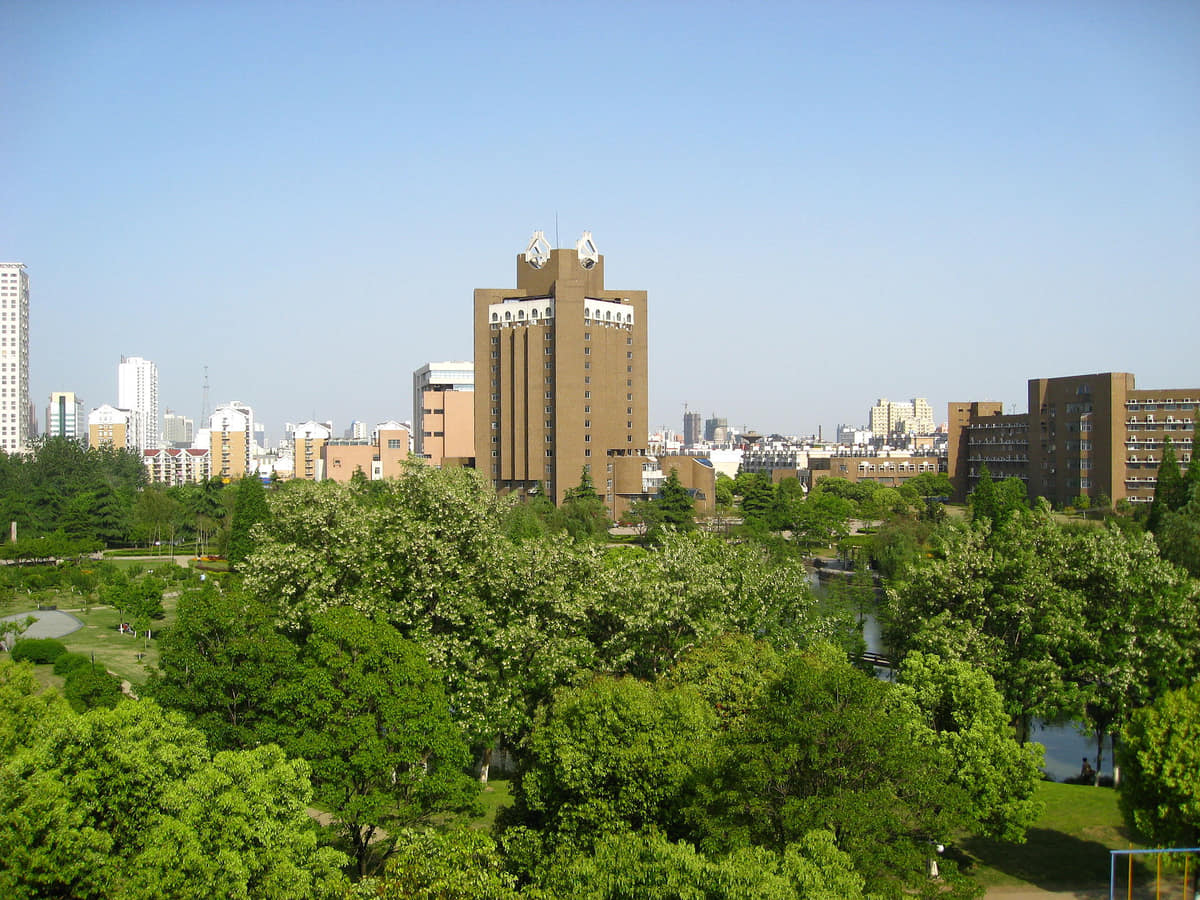
Universities and laboratories matter, but their citywide impact also runs through manufacturing, education, migration, transport, housing, and public culture.
Read the story