
Published and indexedVersion 1.1.0

Deyang 德阳

Sichuan Province · Sichuan Province, Southwest China

A northern Chengdu Plain city where Sanxingdui archaeology, heavy-equipment manufacturing, Confucian learning, New Year prints, grain fields, and mountain foothills coexist.
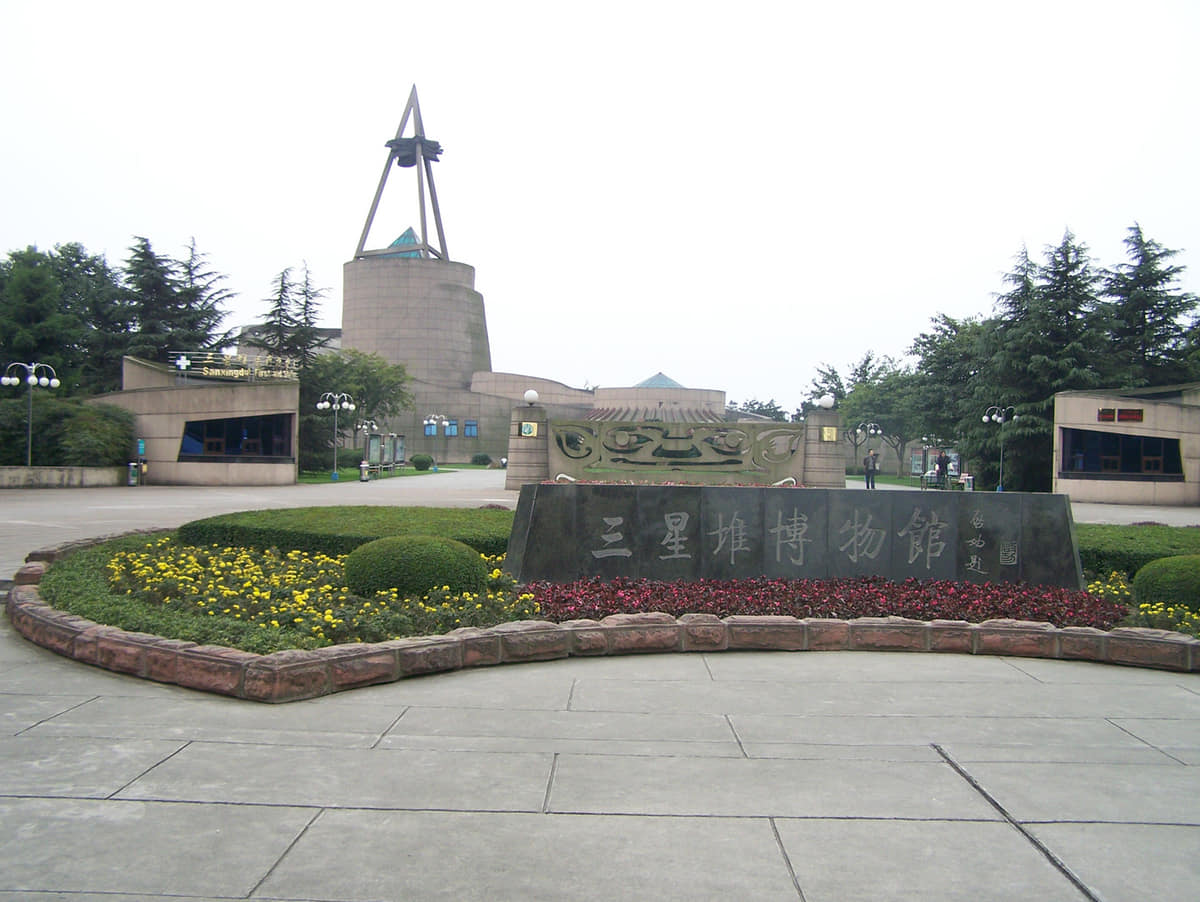
Exterior of Sanxingdui Museum in Guanghan, Deyang
Photo: Jason Zou · source · Public domain

At a glance

Region
Sichuan Province[1][2][3][4]
Administrative type
2 districts, 1 county, and 3 county-level cities[1][2][3][4]
Time zone
China Standard Time (UTC+8)[1][2][3][4]
Population
3.455 million(2024 reference)[1][2][3][4]
Climate
Humid subtropical monsoon climate[1][2][3][4]
Guide scope
Complete municipal coverage across 2 districts, 1 county, and 3 county-level cities[1][2][3][4]

Understand Deyang through connected city and county landscapes

Deyang lies north of Chengdu where the open Chengdu Plain rises toward the Longmen Mountains. Six county-level units connect urban neighborhoods, equipment factories, archaeology, market towns, grain and vegetable fields, foothill valleys, roads, rail, schools, museums, and reconstructed communities.

Sanxingdui is the municipality's most internationally visible subject, yet it should be approached through evidence rather than fantasy: a Bronze Age urban and production landscape, excavated contexts, complex bronze, gold, jade, ivory and other materials, conservation science, changing hypotheses, and questions that remain open.

Deyang is also a major equipment-manufacturing city shaped by large plants, technical schools, worker migration, planned neighborhoods, suppliers, rail and road logistics, occupational knowledge, environmental pressure, and a contemporary transition toward cleaner energy and advanced manufacturing.

A complete exploration moves between Guanghan's archaeology and markets, central Deyang's temple and industry, Mianzhu's prints and foothills, Shifang's heritage and disaster memory, Luojiang's routes and institutions, and Zhongjiang's hills, noodles, farms, and county-town life. No single artifact or slogan can stand for all of them.

Land and water

This city-specific topic connects place, daily life, and the wider municipal landscape: Land and water.

Historical layers

This city-specific topic connects place, daily life, and the wider municipal landscape: Historical layers.

Living culture

This city-specific topic connects place, daily life, and the wider municipal landscape: Living culture.

County diversity

This city-specific topic connects place, daily life, and the wider municipal landscape: County diversity.

Location, boundary, and 3D buildings

This city-specific topic connects place, daily life, and the wider municipal landscape: Chengdu Plain north.[1][2][3][4]

Loading city geometry…
County boundaries: © OpenStreetMap contributors · ODbL

Geography and the shape of the city

Four geographic relationships define Deyang.

Chengdu Plain north

This city-specific topic connects place, daily life, and the wider municipal landscape: Chengdu Plain north.[1][2][3][4]

Longmen piedmont

This city-specific topic connects place, daily life, and the wider municipal landscape: Longmen piedmont.[1][2][3][4]

Tuo River drainage

This city-specific topic connects place, daily life, and the wider municipal landscape: Tuo River drainage.[1][2][3][4]

Six county-level units

This city-specific topic connects place, daily life, and the wider municipal landscape: Six county-level units.[1][2][3][4]

Weather now

Loading current conditions…

Forecast data: Open-Meteo

Population

3.455 million

Permanent residents across Deyang Municipality

Population figures use the administrative area and source date shown below.[1][2][3][4]

Climate

Humid subtropical monsoon climate

Warm wet summers, cloudy mild winters, and piedmont rainfall connect the Chengdu Plain with the Longmen Mountains.

Climate describes long-term seasonal patterns; live conditions appear separately.[1][2][3][4]

Seasonal patterns

March–May

Spring

Temperatures rise quickly; rain, cloud, and local elevation call for flexible outdoor plans in Deyang.[1][2][3][4]

June–August

Summer

Warm wet summers, cloudy mild winters, and piedmont rainfall connect the Chengdu Plain with the Longmen Mountains.[1][2][3][4]

September–November

Autumn

Clearer intervals and cooler evenings usually favor river, old-town, museum, and county routes.[1][2][3][4]

December–February

Winter

Damp cool conditions make layered clothing and indoor–outdoor route pairing practical.[1][2][3][4]

A short history of the city

Nine evidence-led layers move from plain settlement and Bronze Age Sanxingdui through county institutions, print craft, industrial construction, municipal formation, earthquake reconstruction, and current research.

Image credits and licenses
  1. Plain settlement and exchange

    Rivers, fertile alluvium, foothill resources, routes, and earlier archaeological remains formed the environmental setting in which larger settlements later developed. Evidence is uneven, and present administrative borders did not exist.[3][6]

  2. Sanxingdui's urban and craft landscape

    A large walled settlement, specialized production, long-distance material connections, and deposits containing bronze, gold, jade, ivory and other objects reveal organized labor and complex ritual or political life. Without a deciphered local written corpus, many names and meanings remain unknown.[6][8][7]

  3. Counties, farming, and routes

    Administrative centers, irrigated fields, roads, river crossings, tombs, markets, and changing regional institutions reorganized the plain after the Bronze Age. Archaeology and later records illuminate different places and periods rather than one continuous city narrative.[3][15]

  4. Learning, temples, towns, and craft

    Confucian institutions, temples, market towns, workshops, farming, transport, and local lineages shaped municipal landscapes. Deyang Confucian Temple records education and ritual history, while surviving fabric reflects repeated rebuilding and repair.[3][14]

  5. Mianzhu print networks

    Drafting, woodblock carving, printing, hand coloring, paper, pigments, workshops, apprentices, seasonal demand, merchants, and household display sustained Mianzhu New Year prints. Production scale and subject matter changed with markets and social conditions.[9]

  6. Heavy-equipment construction

    Major machinery and power-equipment projects brought engineers, skilled workers, families, schools, housing, rail sidings, suppliers, and new technical cultures. The industrial city was built through migration and labor, with workplace hazards and environmental costs as well as production capacity.[10][12]

  7. Prefecture-level city and municipal networks

    Deyang became a prefecture-level city in 1983. Administrative consolidation linked the central industrial city with Guanghan, Shifang, Mianzhu, Luojiang, Zhongjiang and their distinct economies, histories, services, travel times, and landscapes.[1][3]

  8. Loss, rescue, rebuilding, and memory

    The Wenchuan earthquake caused severe loss and destruction in western Deyang, especially Mianzhu and Shifang. Rescue, temporary settlement, rebuilding, relocation, schools, livelihoods, memorial sites, engineering lessons, and survivor experiences should be interpreted with care and dignity.[1][3][11]

  9. New archaeology and industrial transition

    Recent Sanxingdui excavation combines field archaeology with materials science, conservation, environmental study, and digital documentation. At the same time, equipment manufacturing, clean-energy systems, services, farming, logistics, heritage institutions, and metropolitan links continue to change Deyang.[8][13][2]

People, language, and everyday rhythms

Six perspectives describe Deyang through language, archaeology, industry, craft, reconstruction, and the different daily geographies of its county-level units.

Languages and speech

Southwestern Mandarin and Standard Mandarin are widely used, with differences among central Deyang, Guanghan, Mianzhu, Shifang, Luojiang, Zhongjiang, age groups, schools, workplaces, and migrant households. Speech should be recorded without turning pronunciation into personality stereotypes.[2][3][10]

Archaeology and museum labor

Excavators, surveyors, conservators, materials scientists, photographers, registrars, collection managers, designers, educators, security staff, cleaners, guides, and nearby residents all participate in the Sanxingdui knowledge system; famous objects are only the visible end.[2][3][10]

Industrial communities

Workers, engineers, apprentices, technicians, maintenance crews, suppliers, logistics teams, safety staff, families, and retirees hold different memories of factory life. Gender, job classification, housing, health, wages, and migration shape unequal experiences.[2][3][10]

Craft and market households

Printmakers, block carvers, colorists, paper and pigment suppliers, noodle makers, cooks, vendors, growers, small manufacturers, shopkeepers, and delivery workers connect craft and food traditions to present incomes, regulations, training, and changing demand.[2][3][10]

Reconstruction generations

Survivors, rescue workers, medical teams, teachers, planners, builders, relocated households, volunteers, children who grew up after 2008, and new residents relate differently to disaster and reconstruction. Consent and privacy matter when recording personal memory.[2][3][10]

One municipality, many daily geographies

A museum worker in Guanghan, a factory technician in Jingyang, a printmaker in Mianzhu, a grower in Shifang, a commuter in Luojiang, and a noodle workshop in Zhongjiang inhabit different schedules and service networks. Municipal averages cannot replace these local lives.[2][3][10]

Culture and daily life

Image credits and licenses

Archaeology with uncertainty

Sanxingdui interpretation separates observed material, excavation context, laboratory results, comparison, working hypotheses, and speculation. The absence of a deciphered local text means exhibitions should state what is known, inferred, debated, or unknown.[5][8]

Conservation and research

Bronze, gold, jade, ivory, soil, organic traces, waterlogged or fragile materials, and reconstructed objects require different stabilization, analysis, storage, handling, and display conditions. Conservation is continuing research, not cosmetic repair.[5][8][7]

Popular Sanxingdui culture

Masks, figures, motifs, animation, merchandise, stage design, social media, and tourism renew public interest. Responsible reuse distinguishes documented artifact features from invented narratives and returns audiences to museums, reports, and source attribution.[5][6]

Mianzhu New Year print process

Drafting, carving, ink printing, hand coloring, line quality, pigment mixing, drying, mounting, subject selection, inscriptions, workshop rhythm, and quality judgment create the finished print. Hand coloring makes variation part of the tradition.[9]

Transmission and market change

Mianzhu print production has experienced expansion, damage, decline, institutional rescue, new training, tourism, collecting, and design adaptation. Viable transmission depends on skilled income, material supply, apprenticeships, authorship, and protection from counterfeit or generic souvenirs.[9]

Confucian temple as an institution

Deyang Confucian Temple can be read through education, ritual, architecture, inscriptions, civic ceremony, repair, tourism, neighborhood commerce, and present public programs. Current events should not be projected unchanged into every historical period.[14][15]

Industrial knowledge and memory

Tooling, drawings, measurement, welding, forging, machining, testing, maintenance, quality systems, teamwork, safety routines, apprenticeships, factory housing, clubs, schools, and retirement memory form a culture larger than finished machines.[10][12]

Plain agriculture and seasonal life

Irrigation, soil, rice and wheat cycles, oilseed, vegetables, pigs and poultry, machinery, market prices, weather, land transfer, aging households, and urban expansion connect food to the wider plain. Rural life is not a timeless scenic background.[1][2]

Disaster memory with dignity

Memorial places require quiet behavior, contextual interpretation, structural and social history, survivor consent, accurate dates, and attention to ongoing risk. Photography and tourism should never turn loss into entertainment.[1][3]

Contemporary public culture

Museums, libraries, cultural centers, theaters, parks, schools, worker clubs, neighborhood rooms, markets, festivals, sports, online media, and county initiatives support different audiences. Culture is produced continuously, not stored only in heritage sites.[1][15]

Food and local flavor

Twelve entries place famous local foods within technique, workshop regulation, agriculture, preservation, canteens, markets, and everyday meals; contextual images are never presented as Deyang originals.

Image credits and licenses
  • Twice-cooked pork serving formatPhoto: Guilhem Vellut from Paris, France · source · CC BY 2.0
  • Guokui flatbread formPhoto: ROSALXF on Pixabay . · source · CC0
  • Rice-noodle bowl and condimentsPhoto: Pratyeka · source · CC BY-SA 4.0
Guanghan town dish

Lianshan twice-cooked pork

Official local accounts emphasize large slices of initially simmered pork, controlled rendering until the slices curl, local seasonings, garlic shoots, and sometimes pieces of guokui. Technique, sourcing, portion size, fat balance, and individual restaurant practice vary.[16][19]

Breakfast bowl

Mianzhu rice noodles

Rice noodles, broth, meat or other toppings, chile, aromatics, pickles, portion, and rapid service form a common breakfast system. The contextual gallery image is not from Mianzhu; local shops and official records should guide specific claims.[17]

Cured poultry

Shifang salted duck

Salting, spice, air-drying or curing, cooking, slicing, storage, season, bird source, salt level, and food-safety controls shape the product. Names and methods vary among Shifang producers, so labels and maker records matter.[3][1]

Workshop staple

Zhongjiang dried noodles

Flour, water, salt, kneading, resting, stretching, hanging, weather, drying, breakage, moisture control, packaging, nutrition labels, workshop hygiene, and geographical-indication rules connect a delicate noodle with regulated small production.[18]

Soy-based cold dish

Luojiang douji

Despite the name, this local preparation is associated with layered bean-curd skin or soy material rather than poultry. Seasoning, pressing or rolling, slicing, texture, storage, and producer variation should be checked at the point of sale.[3][1]

Bread and meal component

Guokui

Wheat dough may be plain, layered, filled, griddled, baked, or combined with other dishes. Fermentation, fat, folding, thickness, heat, crisp shell, interior chew, holding time, and maker style create multiple forms rather than one municipal recipe.[16][3]

Pantry system

Soy sauce and fermented seasonings

Soy sauce, fermented beans, broad-bean chile paste, pickles, vinegar, garlic, ginger, scallion, and chile oils build layers of salt, aroma, heat, sweetness, and savoriness. Brand claims require labels; household mixtures and restaurant sauces vary.[16][3]

Agricultural calendar

Plain-season vegetables and rapeseed oil

Leafy greens, shoots, beans, roots, alliums, chile, rapeseed oil, rice, wheat, and market availability shift with season and farming conditions. Everyday vegetable cooking is a stronger account of place than a fixed list of famous dishes.[2][1]

Household preservation

Cured meats and pickles

Salt, brine, smoke, air, jars, spice, time, temperature, cleanliness, meat source, nitrite control, and storage determine safety and flavor. Foothill, plain, urban, and household methods are not identical.[1][3]

Collective meal

Rural banquet cooking

Large meals coordinate purchasing, preparation, steaming, frying, braising, bowls, borrowed equipment, seating, serving order, reciprocal labor, leftovers, cost, dietary needs, and food safety. Menus change by village, family, and occasion.[19][3]

Institutional everyday food

Factory and school canteens

Rice, noodles, steamed bread, vegetables, soups, meat dishes, portioning, shift schedules, budgets, procurement, nutrition, allergies, cleanliness, and waste connect industrial and educational life to large-scale everyday cooking.[2][10]

Living food culture

Markets and home tables

Breakfast stalls, wet markets, supermarkets, noodle shops, bakeries, tea, fruit, snacks, family dinners, delivery platforms, price, time, mobility, and dietary choice describe how residents actually eat. Famous foods are only one layer.[2][1]

Landmarks and architecture

Image credits and licenses

Sanxingdui Museum

A museum complex for collections, conservation, research, education, and public interpretation. Visit with time for object labels, material details, uncertainty, conservation information, and the relationship between exhibits and the archaeological site.[5][6]

Sanxingdui archaeological site

A large archaeological landscape of settlement, walls, production areas, deposits, soil, water, vegetation, protected excavation spaces, research infrastructure, and surrounding communities. Public access follows conservation and active-work rules.[8][6]

Deyang Confucian Temple

Read the central complex through its axis, halls, courtyards, timber and masonry, inscriptions, trees, ritual and education history, repeated repairs, current programs, neighboring streets, accessibility, and visitor behavior.[14][15]

Mianzhu New Year Painting Museum and workshop landscape

Collections, blocks, pigments, tools, historical prints, demonstrations, working studios, villages, teachers, apprentices, sales, copyright, and visitor demand connect museum knowledge with a living craft economy.[9]

Deyang Stone Carving Park

A modern public art and park landscape where commissioned stone work, paths, water, planting, weathering, maintenance, recreation, accessibility, and the changing city around it can be studied together.[1][15]

Huijian Temple, Shifang

A county heritage complex requiring attention to historical fabric, sculpture, ritual use, community stewardship, conservation phases, vegetation, fire and structural safety, opening conditions, and respectful conduct.[15][14]

Pang Tong Shrine and Tomb, Luojiang

Architecture, memorial practice, inscriptions, landscape, textual tradition, later rebuilding, local identity, tourism, and conservation overlap here. Historical figure, commemorative narrative, and surviving material evidence should be distinguished.[14][15]

Yanying Mountain, Zhongjiang

A county landscape of ridge topography, paths, woodland, farms, water, settlement, local recreation, stories, seasonality, erosion, maintenance, and changing access—not merely a viewpoint.[3][1]

Luocheng and Fanghu, Guanghan

Historic place names, surviving and reconstructed fabric, water, streets, gardens, civic memory, archaeology, commercial use, repairs, and present public space provide a second Guanghan story beyond Sanxingdui.[15]

Hanwang and Chuanxindian memorial landscapes

Places associated with the 2008 earthquake should be approached through human loss, rescue, relocation, rebuilding, industrial and community history, structural learning, survivor dignity, access rules, and present hazard awareness.[1][3]

Deyang's equipment-manufacturing corridor

Large operating plants, rail and road logistics, suppliers, technical institutions, worker neighborhoods, energy systems, safety controls, environmental management, and industrial transition form a productive landscape. Most sites are not casual visitor attractions.[10][12][13]

Zhongjiang county town and noodle-workshop context

County streets, markets, schools, workshops, drying conditions, labels, food-safety regulation, nearby farms, roads, hills, and household consumption connect a familiar noodle to a specific production landscape.[18][3]

Ways to explore the city

Three routes pair the core city with contrasting county-level landscapes.

Field route

Sanxingdui Museum → archaeological park → Guanghan town

Use this sequence to compare the core city with a distinct county-level landscape.[1][2][3][4]

Field route

Deyang Confucian Temple → industrial museum context → city river

Use this sequence to compare the core city with a distinct county-level landscape.[1][2][3][4]

Field route

Mianzhu print village → mountain foothills → Shifang fields

Use this sequence to compare the core city with a distinct county-level landscape.[1][2][3][4]

Continue with a local story

Documentary image for a local story about Deyang
Photo: Jason Zou · source · Public domain
Featured story

What connects ancient bronze masks with modern machinery?

They belong to different eras, yet both reveal organized knowledge, material expertise, specialized labor, and Deyang's changing regional role.

Read the story

Sources, revision, and publication status

v1.1.0
Last content update
Publication statusPublished
Image verificationImage rights and place accuracy are approved.
Map verificationMap license, version, and administrative code are verified.

Numbered reference sources

  1. Deyang Municipal Government — official portal
  2. Deyang — reviewed population and statistical reference
  3. Sichuan Local Chronicles — Deyang records
  4. China Meteorological Administration — climate reference
  5. Sanxingdui Museum — collections, exhibitions, archaeology, conservation, and education
  6. Ministry of Culture and Tourism — Sanxingdui Museum and ancient Shu archaeology
  7. Sichuan Cultural Heritage Administration — Sanxingdui bronze tree record
  8. Sichuan Cultural Heritage Administration — 2022 Sanxingdui excavation and multidisciplinary findings
  9. China ICH Network — Mianzhu New Year print techniques, history, subjects, and transmission
  10. Sichuan Local Chronicles — heavy-equipment construction and Deyang's industrial-city formation
  11. Sichuan Local Chronicles — Mianzhu industrial and community history
  12. NDRC — Deyang city and major equipment-manufacturing profile
  13. Deyang Government Service Network — clean-energy equipment industry
  14. Sichuan Cultural Heritage Administration — conservation planning for Deyang Confucian Temple and Luojiang heritage
  15. Deyang official record — protected historic place names and sites across the municipality
  16. Guanghan Municipal Government — Lianshan twice-cooked pork, ingredients, and technique
  17. Mianzhu official media — rice noodles and local breakfast culture
  18. Deyang official record — Zhongjiang dried-noodle workshops, labels, safety, and geographical indications
  19. Sichuan Department of Commerce — reviewed rural dishes and participating establishments
Report a correction