
Zhangjiajie First-Time Guide: What to See and How to Plan
Plan a first visit to Zhangjiajie with realistic timing, cultural context, priority landmarks, seasonal guidance, and routes that reflect the city's geography.
The short answer
Allow at least two full park days plus one city or Tianmen day. The national forest area, Wulingyuan entrances, canyon routes, and Tianmen Mountain are separate systems whose queues and weather cannot be compressed safely.
What to prioritize
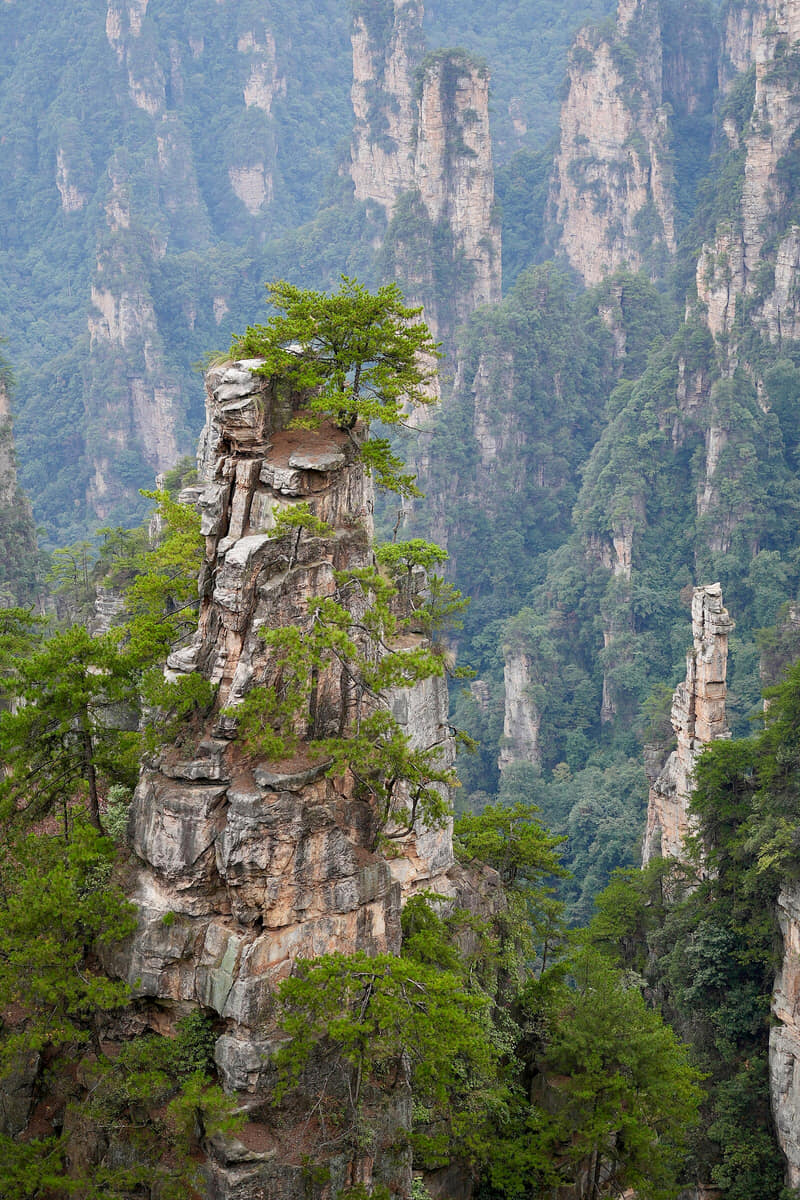
Zhangjiajie is more than sandstone pillars: Wulingyuan's protected landscape, Tianmen Mountain, Tujia and other community traditions, Sangzhi county history, farms, forest work, tourism labor, and access constraints shape the municipality. Wulingyuan sandstone pillar landscape, Lishui river headwaters, Forested karst and mountain basins, Two districts and two counties explain why the municipality cannot be reduced to its best-known attraction. The guide connects documented history, living culture, food systems, work, landmarks, and three field routes without treating residents as a single type. District and county conditions vary. Current weather, access rules, conservation requirements, and local guidance should be checked before travel.
Wulingyuan
Wulingyuan provides one physical entry point into Zhangjiajie. Its fabric, date, use, conservation status, and current access should be read separately and in relation to Yuanjiajie.[1][2][3][4]
Yuanjiajie
Yuanjiajie provides one physical entry point into Zhangjiajie. Its fabric, date, use, conservation status, and current access should be read separately and in relation to Yangjiajie.[1][2][3][4]
Yangjiajie
Yangjiajie provides one physical entry point into Zhangjiajie. Its fabric, date, use, conservation status, and current access should be read separately and in relation to Tianmen Mountain.[1][2][3][4]
Tianmen Mountain
Tianmen Mountain provides one physical entry point into Zhangjiajie. Its fabric, date, use, conservation status, and current access should be read separately and in relation to Baofeng Lake.[1][2][3][4]
Baofeng Lake
Baofeng Lake provides one physical entry point into Zhangjiajie. Its fabric, date, use, conservation status, and current access should be read separately and in relation to Sangzhi county cultural landscape.[1][2][3][4]
Sangzhi county cultural landscape
Sangzhi county cultural landscape provides one physical entry point into Zhangjiajie. Its fabric, date, use, conservation status, and current access should be read separately and in relation to Wulingyuan.[1][2][3][4]
Build a realistic first visit
- Choose a park entrance and elevation sequence before arrival because buses, lifts, cableways, stairs, queues, and one-way flows can radically change the day.
- Cloud and rain are part of the mountain environment; do not add unsafe detours or chase viewpoints when visibility, lightning, ice, or crowd controls intervene.
- Tianmen Mountain is not inside the same visitor system as the Wulingyuan scenic area, so tickets, transport, timing, and operating rules must be checked separately.
- Attribute Tujia and other community practices to specific people, places, institutions, and present contexts rather than using ethnicity as decorative shorthand.
Seasonal orientation
Spring
Spring in Zhangjiajie can change quickly; rain, wind, pollen, fog, or elevation should be checked before long outdoor routes.[1][2][3][4]
Summer
Heavy rain, fog, hot valley summers, cooler peaks, winter ice at elevation, and rapid weather change strongly affect paths and rural access.[1][2][3][4]
Autumn
Autumn often provides clearer intervals and cooler evenings, but current forecasts still matter for coast, mountain, river, and county routes.[1][2][3][4]
Winter
Winter conditions vary across the municipality; layered clothing and paired indoor–outdoor routes are the safest general approach.[1][2][3][4]