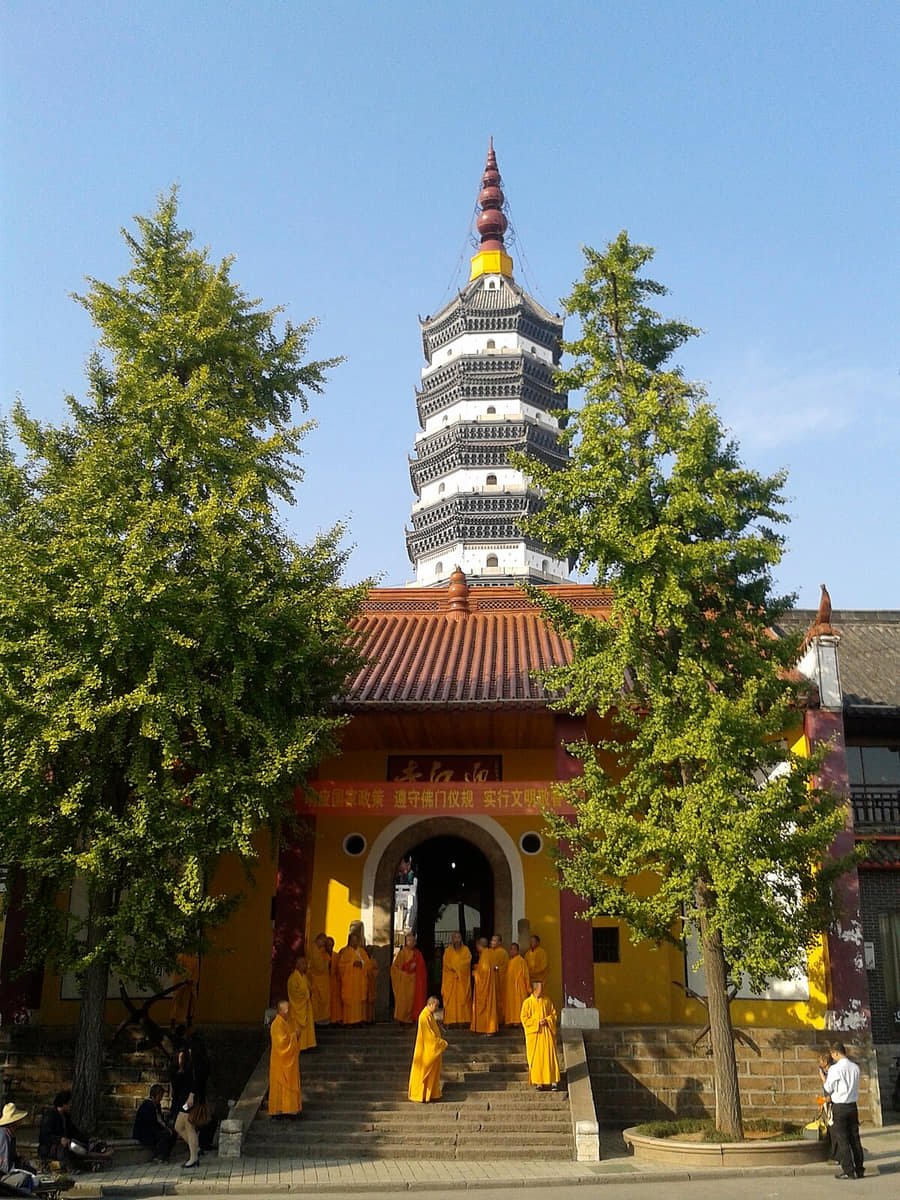
Anqing is a Yangtze gateway to the Dabie Mountains, connecting Huangmei opera, Tongcheng scholarship, Zhenfeng Pagoda, historic streets, river ports, Tianzhu Mountain, craft villages, and county agriculture.
10 county-level units with reviewed boundaries[1][2][3][4]
Read Anqing as a complete municipality
Anqing is a Yangtze gateway to the Dabie Mountains, connecting Huangmei opera, Tongcheng scholarship, Zhenfeng Pagoda, historic streets, river ports, Tianzhu Mountain, craft villages, and county agriculture.
Yangtze riverfront and floodplain, Dabie Mountain counties, Tianzhu Mountain massif, Lake, river, and agricultural lowlands explain why the municipality cannot be reduced to its best-known landmark.
Huangmei opera performance, Tongcheng school archives, Wangjiang cross-stitch embroidery, Zhenfeng Pagoda and temple stewardship, Yangtze port and ferry memory, Dabie mountain village craft are documented as distinct practices carried by particular institutions and communities, not as traits shared by every resident.
This profile separates dated population, long-term climate, live weather, historical evidence, current access, and editorial interpretation. District and county conditions require local checks.
Land and water
Land and water, Historical layers, and Living culture and work form a connected spatial system in Anqing. Reading them together keeps the central city, outer districts, county seats, villages, water, and terrain at their proper scales.
Historical layers
Historical layers, Living culture and work, and County-level differences form a connected spatial system in Anqing. Reading them together keeps the central city, outer districts, county seats, villages, water, and terrain at their proper scales.
Living culture and work
Living culture and work, County-level differences, and Land and water form a connected spatial system in Anqing. Reading them together keeps the central city, outer districts, county seats, villages, water, and terrain at their proper scales.
County-level differences
County-level differences, Land and water, and Historical layers form a connected spatial system in Anqing. Reading them together keeps the central city, outer districts, county seats, villages, water, and terrain at their proper scales.
Yangtze riverfront and floodplain, Dabie Mountain counties, and Tianzhu Mountain massif form a connected spatial system in Anqing. Reading them together keeps the central city, outer districts, county seats, villages, water, and terrain at their proper scales.[1][2][3][4]
Dabie Mountain counties
Dabie Mountain counties, Tianzhu Mountain massif, and Lake, river, and agricultural lowlands form a connected spatial system in Anqing. Reading them together keeps the central city, outer districts, county seats, villages, water, and terrain at their proper scales.[1][2][3][4]
Tianzhu Mountain massif
Tianzhu Mountain massif, Lake, river, and agricultural lowlands, and Yangtze riverfront and floodplain form a connected spatial system in Anqing. Reading them together keeps the central city, outer districts, county seats, villages, water, and terrain at their proper scales.[1][2][3][4]
Lake, river, and agricultural lowlands
Lake, river, and agricultural lowlands, Yangtze riverfront and floodplain, and Dabie Mountain counties form a connected spatial system in Anqing. Reading them together keeps the central city, outer districts, county seats, villages, water, and terrain at their proper scales.[1][2][3][4]
Population figures use the administrative area and source date shown below.[1][2][3][4]
Climate
Humid subtropical monsoon climate
The Yangtze plain has hot humid summers and cool damp winters, while the Dabie and Tianzhu mountains are cooler and wetter; floods, heat, fog, and mountain storms vary by county.
Climate describes long-term seasonal patterns; live conditions appear separately.[1][2][3][4]
Seasonal patterns
March–May
Spring
Spring conditions in Anqing can change quickly. Check rain, wind, fog, pollen, temperature, elevation, and coastal or mountain exposure for the exact route.[1][2][3][4]
June–August
Summer
The Yangtze plain has hot humid summers and cool damp winters, while the Dabie and Tianzhu mountains are cooler and wetter; floods, heat, fog, and mountain storms vary by county.[1][2][3][4]
September–November
Autumn
Autumn often brings cooler evenings and clearer intervals, but river, coast, mountain, desert, grassland, and county conditions still require a current forecast.[1][2][3][4]
December–February
Winter
Winter varies across Anqing's municipality. Check cold, wind, ice, snow, fog, heating, road, and elevation conditions rather than applying one city-center forecast everywhere.[1][2][3][4]
A short history of the city
Five dated layers connect material evidence with present urban and county form.
Yangtze routes and mountain exchange
Yangtze routes and mountain exchange belongs to Anqing's longer sequence from Yangtze routes and mountain exchange to Riverfront renewal, performance, and mountain tourism. Archaeology, surviving sites, collections, routes, maps, and current urban form provide different evidence and should not be collapsed into one narrative.[1][2][3][4]
Prefectural city, temples, and academies
Prefectural city, temples, and academies belongs to Anqing's longer sequence from Yangtze routes and mountain exchange to Riverfront renewal, performance, and mountain tourism. Archaeology, surviving sites, collections, routes, maps, and current urban form provide different evidence and should not be collapsed into one narrative.[1][2][3][4]
Tongcheng scholarship and regional craft
Tongcheng scholarship and regional craft belongs to Anqing's longer sequence from Yangtze routes and mountain exchange to Riverfront renewal, performance, and mountain tourism. Archaeology, surviving sites, collections, routes, maps, and current urban form provide different evidence and should not be collapsed into one narrative.[1][2][3][4]
Port, industry, education, and urban change
Port, industry, education, and urban change belongs to Anqing's longer sequence from Yangtze routes and mountain exchange to Riverfront renewal, performance, and mountain tourism. Archaeology, surviving sites, collections, routes, maps, and current urban form provide different evidence and should not be collapsed into one narrative.[1][2][3][4]
Riverfront renewal, performance, and mountain tourism
Riverfront renewal, performance, and mountain tourism belongs to Anqing's longer sequence from Yangtze routes and mountain exchange to Riverfront renewal, performance, and mountain tourism. Archaeology, surviving sites, collections, routes, maps, and current urban form provide different evidence and should not be collapsed into one narrative.[1][2][3][4]
People, language, and everyday rhythms
Residents are described through language, work, mobility, neighborhood, and present choice—not fixed personality labels.
Anqing local speech and Standard Mandarin
Language use varies by household, generation, neighborhood, school, workplace, county, and migration history. Speech cannot be used as a fixed identity label.[1][2][3][4]
Urban cores, county seats, towns, and villages
Anqing's communities differ in density, services, transport, work, land use, and daily schedules across the municipality.[1][2][3][4]
Work, study, migration, and family networks
Residents connect Anqing to other places through employment, study, trade, care, migration, and tourism, continually changing local communities.[1][2][3][4]
Community-specific and changing identities
Age, occupation, language, gender, neighborhood, county background, and personal choice produce varied experiences; no single personality represents Anqing.[1][2][3][4]
Culture and daily life
Huangmei opera performance
Huangmei opera performance is presented through named places, practitioners, institutions, materials, work, and community choices. Its relationship with Tongcheng school archives and Wangjiang cross-stitch embroidery shows a living, changing practice rather than a fixed citywide identity.[1][2][3][4]
Tongcheng school archives
Tongcheng school archives is presented through named places, practitioners, institutions, materials, work, and community choices. Its relationship with Wangjiang cross-stitch embroidery and Zhenfeng Pagoda and temple stewardship shows a living, changing practice rather than a fixed citywide identity.[1][2][3][4]
Wangjiang cross-stitch embroidery
Wangjiang cross-stitch embroidery is presented through named places, practitioners, institutions, materials, work, and community choices. Its relationship with Zhenfeng Pagoda and temple stewardship and Yangtze port and ferry memory shows a living, changing practice rather than a fixed citywide identity.[1][2][3][4]
Zhenfeng Pagoda and temple stewardship
Zhenfeng Pagoda and temple stewardship is presented through named places, practitioners, institutions, materials, work, and community choices. Its relationship with Yangtze port and ferry memory and Dabie mountain village craft shows a living, changing practice rather than a fixed citywide identity.[1][2][3][4]
Yangtze port and ferry memory
Yangtze port and ferry memory is presented through named places, practitioners, institutions, materials, work, and community choices. Its relationship with Dabie mountain village craft and Huangmei opera performance shows a living, changing practice rather than a fixed citywide identity.[1][2][3][4]
Dabie mountain village craft
Dabie mountain village craft is presented through named places, practitioners, institutions, materials, work, and community choices. Its relationship with Huangmei opera performance and Tongcheng school archives shows a living, changing practice rather than a fixed citywide identity.[1][2][3][4]
Food and local flavor
Six locally named food records connect ingredients, technique, work, markets, and social settings.
Jiangmao dumplings is one locally named food record. Ingredients, technique, season, maker, serving context, and district or county provenance should be checked separately rather than inferred from the name alone.
Sweet-potato-starch dumplings is one locally named food record. Ingredients, technique, season, maker, serving context, and district or county provenance should be checked separately rather than inferred from the name alone.
Anqing broad-bean sauce is one locally named food record. Ingredients, technique, season, maker, serving context, and district or county provenance should be checked separately rather than inferred from the name alone.
Tianzhu tea is one locally named food record. Ingredients, technique, season, maker, serving context, and district or county provenance should be checked separately rather than inferred from the name alone.
Yangtze fish dishes is one locally named food record. Ingredients, technique, season, maker, serving context, and district or county provenance should be checked separately rather than inferred from the name alone.
Huaining tribute cakes is one locally named food record. Ingredients, technique, season, maker, serving context, and district or county provenance should be checked separately rather than inferred from the name alone.
Zhenfeng Pagoda is a physical entry point into Anqing. Surviving fabric, date, use, conservation, current access, and its relationship with Tianzhu Mountain remain separate questions.[1][2][3][4]
Tianzhu Mountain
Tianzhu Mountain is a physical entry point into Anqing. Surviving fabric, date, use, conservation, current access, and its relationship with View from Zhenfeng Pagoda remain separate questions.[1][2][3][4]
View from Zhenfeng Pagoda
View from Zhenfeng Pagoda is a physical entry point into Anqing. Surviving fabric, date, use, conservation, current access, and its relationship with Huangmei opera stage culture remain separate questions.[1][2][3][4]
Huangmei opera stage culture
Huangmei opera stage culture is a physical entry point into Anqing. Surviving fabric, date, use, conservation, current access, and its relationship with Anqing Yangtze River Bridge remain separate questions.[1][2][3][4]
Anqing Yangtze River Bridge
Anqing Yangtze River Bridge is a physical entry point into Anqing. Surviving fabric, date, use, conservation, current access, and its relationship with Yuexi mountain villages remain separate questions.[1][2][3][4]
Yuexi mountain villages
Yuexi mountain villages is a physical entry point into Anqing. Surviving fabric, date, use, conservation, current access, and its relationship with Zhenfeng Pagoda remain separate questions.[1][2][3][4]
Ways to explore the city
Three field sequences connect the urban core with contrasting district or county landscapes.
Field route
Zhenfeng Pagoda → old city → Yangtze waterfront
Zhenfeng Pagoda → old city → Yangtze waterfront is route 1 for comparing Anqing's built form, landscape, work, and district or county context. Verify live weather, transport, opening, safety, and conservation rules before departure.[1][2][3][4]
Field route
Anqing museum context → Huangmei opera venue → Tongcheng
Anqing museum context → Huangmei opera venue → Tongcheng is route 2 for comparing Anqing's built form, landscape, work, and district or county context. Verify live weather, transport, opening, safety, and conservation rules before departure.[1][2][3][4]
Field route
Tianzhu Mountain → Qianshan county town → mountain villages
Tianzhu Mountain → Qianshan county town → mountain villages is route 3 for comparing Anqing's built form, landscape, work, and district or county context. Verify live weather, transport, opening, safety, and conservation rules before departure.[1][2][3][4]
Sources and review
Last content update
Image verificationImage rights and place accuracy are approved.
Map verificationMap license, version, and administrative code are verified.